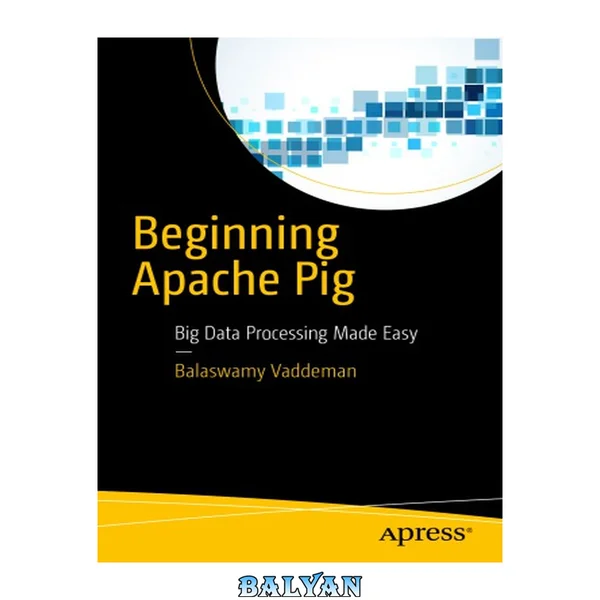
Front Matter....Pages i-xxiii MapReduce and Its Abstractions....Pages 1-20 Data Types....Pages 21-31 Grunt....Pages 33-40 Pig Latin Fundamentals....Pages 41-67 Joins and Functions....Pages 69-87 Creating and Scheduling Workflows Using Apache Oozie....Pages 89-101 HCatalog....Pages 103-113 Pig Latin in Hue....Pages 115-122 Pig Latin Scripts in Apache Falcon....Pages 123-136 Macros....Pages 137-145 User-Defined Functions....Pages 147-155 Writing Eval Functions....Pages 157-169 Writing Load and Store Functions....Pages 171-186 Troubleshooting....Pages 187-199 Data Formats....Pages 201-208 Optimization....Pages 209-223 Hadoop Ecosystem Tools....Pages 225-248 Back Matter....Pages 249-274 "Learn to use Apache Pig to develop lightweight big data applications easily and quickly. This book shows you many optimization techniques and covers every context where Pig is used in big data analytics. Beginning Apache Pig shows you how Pig is easy to learn and requires relatively little time to develop big data applications. The book is divided into four parts: the complete features of Apache Pig; integration with other tools; how to solve complex business problems; and optimization of tools. You'll discover topics such as MapReduce and why it cannot meet every business need; the features of Pig Latin such as data types for each load, store, joins, groups, and ordering; how Pig workflows can be created; submitting Pig jobs using Hue; and working with Oozie. You'll also see how to extend the framework by writing UDFs and custom load, store, and filter functions. Finally you'll cover different optimization techniques such as gathering statistics about a Pig script, joining strategies, parallelism, and the role of data formats in good performance. What You Will Learn* Use all the features of Apache Pig* Integrate Apache Pig with other tools* Extend Apache Pig* Optimize Pig Latin code* Solve different use cases for Pig LatinWho This Book Is ForAll levels of IT professionals: architects, big data enthusiasts, engineers, developers, and big data administrators."-- Provided by publisher Learn to use Apache Pig to develop lightweight big data applications easily and quickly. This book shows you many optimization techniques and covers every context where Pig is used in big data analytics. __Beginning Apache Pig__ shows you how Pig is easy to learn and requires relatively little time to develop big data applications.The book is divided into four parts: the complete features of Apache Pig; integration with other tools; how to solve complex business problems; and optimization of tools.You'll discover topics such as MapReduce and why it cannot meet every business need; the features of Pig Latin such as data types for each load, store, joins, groups, and ordering; how Pig workflows can be created; submitting Pig jobs using Hue; and working with Oozie. You'll also see how to extend the framework by writing UDFs and custom load, store, and filter functions. Finally you'll cover different optimization techniques such as gathering statistics about a Pig script, joining strategies, parallelism, and the role of data formats in good performance. **What You Will Learn**• Use all the features of Apache Pig• Integrate Apache Pig with other tools• Extend Apache Pig• Optimize Pig Latin code• Solve different use cases for Pig Latin**Who This Book Is For**All levels of IT professionals: architects, big data enthusiasts, engineers, developers, and big data administrators Learn to use Apache Pig to develop lightweight big data applications easily and quickly. This book shows you many optimization techniques and covers every context where Pig is used in big data analytics. Beginning Apache Pig shows you how Pig is easy to learn and requires relatively little time to develop big data applications. The book is divided into four parts: the complete features of Apache Pig; integration with other tools; how to solve complex business problems; and optimization of tools. You'll discover topics such as MapReduce and why it cannot meet every business need; the features of Pig Latin such as data types for each load, store, joins, groups, and ordering; how Pig workflows can be created; submitting Pig jobs using Hue; and working with Oozie. You'll also see how to extend the framework by writing UDFs and custom load, store, and filter functions. Finally you'll cover different optimization techniques such as gathering statistics about a Pig script, joining strategies, parallelism, and the role of data formats in good performance. What You Will Learn • Use all the features of Apache Pig • Integrate Apache Pig with other tools • Extend Apache Pig • Optimize Pig Latin code • Solve different use cases for Pig Latin Who This Book Is For All levels of IT professionals: architects, big data enthusiasts, engineers, developers, and big data administrators