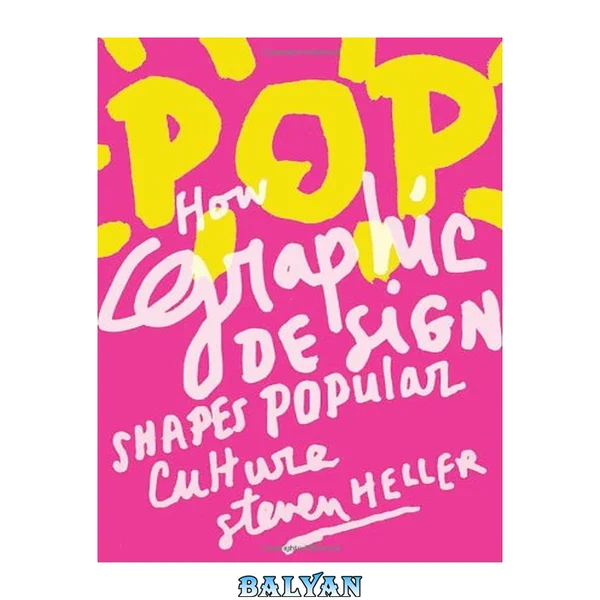
This update to the first book to provide explicit case histories of the successful marriage of form and content in graphic design explores more than 125 classic and contemporary works-30 of them brand new-explaining why they are aesthetically significant and how they function as good design. These thought pieces offer a vast taste of the aesthetic, political, historical, and personal issues that move todays global design community and fans. Full of new stories about the graphic icons and idols of todays design culture. Title Page......Page 2 Copyright Page......Page 3 Table of Contents......Page 5 Acknowledgments......Page 10 Introduction......Page 12 PERSUASION......Page 18 Simplicissimus Poster: Thomas Theodore Heine......Page 20 Neue Jugend: John Heartfield......Page 23 Nie: Tadeusz Trepkowski......Page 26 Paper Bombs......Page 28 The Peace Symbol......Page 31 Mushroom Clouds......Page 34 Black Power/White Power: Tomi Ungerer......Page 39 End Bad Breath: Seymour Chwast, Designer......Page 42 Men With No Lips: Robbie Conal......Page 46 Grapus Posters: Grapus......Page 48 Glasnost Posters......Page 51 Cigarette Advertisements......Page 54 Religious Tracts......Page 56 Racism: James Victore......Page 60 Ashcroft . . . You’re Next!: Micah Wright......Page 65 MASS MEDIA......Page 68 Jugend and Simplicissimus......Page 70 PM and AD......Page 72 Picture Magazines of the 1930s......Page 75 Direction: Paul Rand......Page 83 Dell Mapbacks......Page 86 Book Covers: Edward Gorey......Page 88 Portfolio: Alexey Brodovitch......Page 92 Industrial Design: Alvin Lustig......Page 94 Holiday: Frank Zachary......Page 97 Vogue: Alexander Liberman......Page 99 Scope: Will Burtin......Page 102 Herald Tribune: Peter Palazzo......Page 105 Life......Page 107 Esquire......Page 111 Seventeen: Cipe Pineles......Page 115 Eros and Avant Garde: Herb Lubalin......Page 118 Push Pin Graphic: Seymour Chwast, Milton Glaser, Reynold Ruffins, Edward Sorel......Page 120 Evergreen and Ramparts: Ken Deardorf and Dugald Stermer......Page 123 East Village Other......Page 128 Rolling Stone: Fred Woodward......Page 130 MAD Parodies......Page 132 Zap Comix......Page 135 SPY: Stephen Doyle......Page 141 Culture Tabloids......Page 143 The Face: Neville Brody......Page 147 Emigre: Rudy VanderLans and Zuzana Licko......Page 151 RAW: Françoise Mouly and Art Spiegelman......Page 154 Beach Culture: David Carson......Page 158 Colors: Tibor Kalman......Page 161 TYPE......Page 166 Blackletter......Page 168 Bauhaus and the New Typography......Page 171 Typography for Children......Page 174 Peignot: A. M. Cassandre......Page 178 Cooper Black: Oswald Cooper......Page 180 American Typography of the 1960s......Page 184 Hand Lettering: Joost Swarte......Page 186 Mrs Eaves: Zuzana Licko......Page 189 Pussy Galore: Teal Triggs, Liz McQuiston, and Sian Cook......Page 194 ACME Comics Lettering: Chris Ware......Page 198 Template Gothic: Barry Deck......Page 203 Manson/Mason: Jonathan Barnbrook......Page 206 LANGUAGE......Page 210 S lodí jez dovází caj kávu (With the Ship that Carries Tea and Coffee): Karel Teige......Page 212 Depero: Futurista: Fortunato Depero......Page 215 Westvaco Inspirations: Bradbury Thompson......Page 218 Lorca: Three Tragedies: Alvin Lustig......Page 221 Decorative Book Jackets: W. A. Dwiggins......Page 224 Merle Armitage’s Books: Merle Armitage......Page 228 About U.S.: Lester Beall, Brownjohn Chermayeff Geismar, Herb Lubalin, Gene Federico......Page 232 Ha Ha Ha: He Laughs Best Who Laughs Last: Lou Dorfsman......Page 234 Going Out: Gene Federico......Page 236 Man with the Golden Arm: Saul Bass......Page 238 The Area Code (Parenthesis): Ladislav Sutnar......Page 241 Swiss Posters: Armin Hofmann......Page 244 Modern Paperback Covers......Page 249 Bestseller Book Jackets: Paul Bacon......Page 254 The Bald Soprano: Robert Massin......Page 260 Electric Circus: Ivan Chermayeff......Page 265 Blues Project: Victor Moscoso......Page 268 Best of Jazz: Paula Scher......Page 270 Basel Kunstkredit 1976/77: Wolfgang Weingart......Page 273 Cranbrook: Katherine McCoy......Page 276 The Discreet Charm of the Bourgeoisie: Yuri Bokser......Page 281 Radical Modernism: Dan Friedman......Page 284 Generic Design......Page 286 IDENTITY......Page 292 Flight: E. McKnight Kauffer......Page 294 Postage Stamps......Page 298 McGraw-Hill Paperback Covers: Rudolph de Harak......Page 300 Dylan: Milton Glaser......Page 303 NeXT: Paul Rand......Page 305 Dr. Strangelove: Pablo Ferro......Page 309 Restaurant Florent: M&Co.......Page 312 Disney World Signage: Sussman/Preja......Page 314 The Public Theater Posters: Paul Davis......Page 318 The Public Theater: Paula Scher......Page 320 Altria Logo......Page 324 INFORMATION......Page 330 Ripley’s Believe It or Not!......Page 332 Catalog Design Progress: Ladislav Sutnar......Page 335 The Medium is the Massage: Quentin Fiore......Page 337 New York Subway Map: Vignelli and Associates......Page 340 ICONOGRAPHY......Page 344 The Swastika......Page 346 Heroic Icons......Page 350 1939/1940 New York World’s Fair......Page 356 Air Corps U.S. Army: Joseph Binder......Page 360 Shooting Targets......Page 363 Darkie Toothpaste......Page 365 Does It Make Sense?: April Greiman......Page 368 Jambalaya: Stefan Sagmeister......Page 370 STYLE......Page 376 Novelty Typefaces......Page 378 Japanese Movie Tickets......Page 381 The Great Gargantua and Pantagruel: W. A. Dwiggins......Page 384 Vanity Fair and Fortune Covers: Paolo Garretto......Page 387 Artone: Seymour Chwast......Page 390 The Lover: Louise Fili......Page 393 French Paper: Charles Spencer Anderson......Page 396 Propaganda: Art Chantry......Page 399 COMMERCE......Page 404 Show Cards......Page 406 Razor Blade Labels......Page 408 Japanese Matchbox Labels......Page 411 Priester Match Poster: Lucian Bernhard......Page 414 Golden Blossom Honey: Gustav Jensen......Page 417 Advertising Fans......Page 419 Billboards of the 1930s......Page 421 Comic Strip Ads......Page 423 The First Record Album: Alex Steinweiss......Page 426 Cheap Thrills: R. Crumb and Bob Cato......Page 428 Dust Jackets of the 1920s and 1930s......Page 432 Advertising Stamps......Page 434 Atoms for Peace: Erik Nitsche......Page 436 Wolfschmidt: George Lois......Page 439 NYNEX: Chiat/Day/Mojo......Page 443 Bibliography......Page 446 Index......Page 450 Although created to fulfill ephemeral needs, great works of graphic design often become memorable cultural icons representing the times and places of their origins. Design Literacy presents ninety-three "object lessons," specific histories examining the contexts in which well-known, unknown, and anonymous works have made decisive contributions to the evolution of graphic design. Steven Heller and Karen Pomeroy create a mosaic of design stories that offer a series of valuable lessons in how design works and an engaging history of graphic design from the late nineteenth century to the present. Tracing the development of each work, Heller and Pomeroy explain its role in design history and how it relates to the cultural milieu from which it emerged. Design Literacy is a quick remedy for designers and students of design suffering from a diet of too much "eye candy" and hungry to understand the forces at work behind the visual power of great works of graphic design. ""Author and design expert Steven Heller has revisited and revised the popular classic Design Literacy by revising many of the thoughtful essays from the original and mixing in thirty-two new works. Each essay offers a taste of the aesthetic, political, historical, and personal issues that have engaged designers from the late nineteenth century to the present--from the ubiquitous (the swastika, antiwar posters) to the whimsical (MAD magazine parodies). The essays are organized into eight thematic categories--persuasion, mass media, language, identity, information, iconography, style, and commerce. This revised edition also highlights recent trends in graphic design such as aesthetic changes in typography in the digital age and the nexus between graphic design and wired culture. This is an eclectic look at how, why, and if graphic design influences our ever-evolving, diverse world.""--Publisher's description Author and design expert Steven Heller has revisited and revised the popular classic Design Literacy by revising many of the thoughtful essays from the original and mixing in thirty-two new works. Each essay offers a taste of the aesthetic, political, historical, and personal issues that have engaged designers from the late nineteenth century to the present -- from the ubiquitous (the swastika, antiwar posters) to the whimsical (MAD magazine parodies). The essays are organized into eight thematic categories -- persuasion, mass media, language, identity, information, iconography, style, and commerce. This revised edition also highlights recent trends in graphic design such as aesthetic changes in typography in the digital age and the nexus between graphic design and wired culture. This is an eclectic look at how, why, and if graphic design influences our ever-evolving, diverse world. - Back cover.