
Nancy Mitford : a biography
Hastings, Selinaقیمت نهایی
- تخفیف زماندار−۵٬۰۰۰ تومان
۵٬۰۰۰ تومان صرفهجویی نسبت به قیمت اصلی
نسخه اصلی و اورجینال
بلافاصله پس از خرید، فایل کتاب روی دستگاه شما آمادهٔ دانلود است.
مشخصات کتاب
- نویسنده
- Hastings, Selina
- سال انتشار
- ۲۰۱۲
- فرمت
- EPUB
- زبان
- انگلیسی
- حجم فایل
- ۵٫۹ مگابایت
- شابک
- 9780141047461، 9780241976784، 9780307740816، 9780307740830، 9780307740847، 9780307740854، 9780307741363، 9780307741370، 9780307741387، 9780307741394، 9780307949462، 9780307949479، 9780593467275، 9780786705214، 9781299032125، 9781299097568، 9781448112418، 0141047461، 0241976782، 0307740811، 0307740838، 0307740846، 0307740854، 0307741362، 0307741370، 0307741389، 0307741397، 030794946X، 0307949478، 0593467272، 0786705213، 1299032125، 1299097561، 1448112419
دربارهٔ کتاب
On the day which was to be such a turning-point in my life, I went to London by the 9.07. I had planned to do a little shopping; somebody had told me of Chinese robes in the sales, perfect for dinner at home since they would cover up everything. I was also going to see my naughty boy, Basil, a perennial worry to me; Aunt Sadie begged me to look in on Uncle Matthew and there was something I had long wanted to put to him. I had appointments to lunch with the one and to have tea with the other. It was a Saturday because that was Basil’s half-holiday – he was cramming for the Foreign Office. We were to meet at a restaurant, then go back to his lodgings, what used to be called ‘rooms’ and is now called a ‘service flat’. My idea was to do a little, surely much needed, tidying up there, as well as to collect some dirty clothes, and bring them back with me to have them washed or cleaned. I took a large canvas hold-all to contain them and the Chinese robe, if I bought it.
But, oh dear, I don’t think I’ve ever looked such a fool as I did in that Chinese robe, with my brown walking shoes, enormous beneath the hem, hair untidy from dragging off a hat, leather bag clasped to bosom because it had £28 in it and I knew that people snatched bags at sales. The assistant earnestly said think of the difference if I were carefully coiffée and maquillée and parfumée and manicurée and pedicurée, wearing Chinese sandals (next department, 35/6) and lying on a couch in a soft light. It was no good, however – my imagination could not get to work on all these hypotheses; I felt both hot and bothered; I tore the robe from me and fl ed from the displeasure of the saleswoman.
I had made my plan with Basil some days before, on the telephone. Like all the children he is quite incapable of either reading or writing a letter. I was rather more worried about him than usual; last time he had come to Oxford his clothes had been distinctly on the Teddy side while his hair combed (or rather pulled) over his forehead and worn in a bob at the back gave him a curiously horrible look. This, no doubt, is now the fashion and not in itself a cause for alarm. But when he was alone with me he had spoken about his future, saying that the prospect of the Foreign Service bored him and that he thought he could put his talent for languages to better account in some other career. The sinister words ‘get rich quick’ were uttered. I was anxious to see him again and ask a few questions. It was a blow, therefore, though not a great surprise, when he failed to turn up at the restaurant. I lunched there alone and then went off to find his service flat. The address he had given me, in Islington, turned out to be a pretty old house, come down in the world (soon no doubt to come down altogether). There were five or six bells at the front door with cards attached; one bell had no card but somebody had scribbed Baz on the wall beside it. I pressed it, without much hope. Nobody came. I went on pressing at intervals.
A sharp lad in Teddy costume was lounging in the street, eyeing me. Presently he came up and said, ‘If it’s old Baz you’re after, he’s gone to Spain.’
Rain, rain, go to Spain. ‘And when will he be back again?’
‘When he comes for the next batch. Old Baz is a travel agent now, didn’t you know? Joined up with his Grandad – some people are lucky in their relations. Baz herds them out to the Costa Brava, goes into hiding while they live it up there and brings back the bodies a week later. Or that’s the general idea – he’s only just started the work.’
Travel agent – Grandad – what did the child mean? Was not this a line of talk intended to keep me here until a man who was walking up the street should be out of sight? There was nobody else about, this dread Teddy, armed, no doubt, with blades, was clearly after my bag and the £28. I gave him a nervous, idiotic smile. ‘Thank you very much,’ I said, ‘that’s just what I thought. Good-bye and thank you.’
Upper Street was near and very soon I was in a good old No. 19 sagely ambling towards Piccadilly. This sort of thing always happened when I tried to see Basil. Oh well, one must put oneself in his shoes. Why should he want to spend his Saturday afternoon with a middle-aged mother? What a bore for a young man, on his own for the first time, to have to watch this elderly woman messing about in his room and taking away his suits. All the same, it was not like him to throw one over quite so callously; what could have happened? How could I find out? Meanwhile here I was in London on a Saturday afternoon with nothing to do until tea-time. We were passing the National Gallery, but I felt too dispirited to go in. I decided to walk off my bad temper in the Park.
Though I have lived in London for longish periods at various times in my life, I have never been a Londoner, so that its associations to me are more literary and historic than personal. Every time I visit it I am saddened by seeing changes for the worse: the growing inelegance; the loss of character; the disappearance of landmarks and their replacement by fl at and faceless glass houses. When I got off my bus at Hyde Park Corner, I looked sadly at the huge hotel where Montdore House used to be, in Park Lane. When first built it had been hailed as a triumph of modern architecture, but although it had only stood there for three years it had already become shabby, the colour of old teeth, and in an odd way out of date. I stumped off towards Kensington Gardens. Somebody had told me that Knightsbridge Barracks were soon to go, so I said good-bye to them. I had never looked at them very carefully – I now saw that they were solid and well built in a pretty mixture of brick and stone. No masterpiece, but certainly far better than the glorified garage that would replace them. Wendy’s Wishing Well is horribly altered, I noted, and what has happened to the trees in the Broad Walk? However, Kensington Palace is still there, though probably not for long, and eccentric old men are still sailing boats on the Round Pond, which has not, as yet, been dried and levelled and turned into a car park.
Continues...
Excerpted from Don't Tell Alfred by Nancy Mitford Copyright © 2010 by Nancy Mitford. Excerpted by permission.
All rights reserved. No part of this excerpt may be reproduced or reprinted without permission in writing from the publisher.
Excerpts are provided by Dial-A-Book Inc. solely for the personal use of visitors to this web site. Chapter One
There is a photograph in existence of Aunt Sadie and her six children sitting round the tea-table at Alconleigh. The table is situated, as it was, is now, and ever shall be, in the hall, in front of a huge open fire of logs. Over the chimney-piece plainly visible in the photograph, hangs an entrenching tool, with which, in 1915, Uncle Matthew had whacked to death eight Germans one by one as they crawled out of a dug-out. It is still covered with blood and hairs, an object of fascination to us as children. In the photograph Aunt Sadie’s face, always beautiful, appears strangely round, her hair strangely fluffy, and her clothes strangely dowdy, but it is unmistakably she who sits there with Robin, in oceans of lace, lolling on her knee. She seems uncertain what to do with his head, and the presence of Nanny waiting to take him away is felt though not seen. The other children, between Louisa’s eleven and Matt’s two years, sit round the table in party dresses or frilly bibs, holding cups or mugs according to age, all of them gazing at the camera with large eyes opened wide by the flash, and all looking as if butter would not melt in their round pursed-up mouths. There they are, held like flies in the amber of that moment—click goes the camera and on goes life; the minutes, the days, the years, the decades, taking them further and further from that happiness and promise of youth, from the hopes Aunt Sadie must have had for them, and from the dreams they dreamed for themselves. I often think there is nothing quite so poignantly sad as old family groups.
When a child I spent my Christmas holidays at Alconleigh, it was a regular feature of my life, and, while some of them slipped by with nothing much to remember, others were distinguished by violent occurrences and had a definite character of their own. There was the time, for example, when the servants’ wing caught fire, the time when my pony lay on me in the brook and nearly drowned me (not very nearly, he was soon dragged off, but meanwhile bubbles were said to have been observed). There was drama when Linda, aged ten, attempted suicide in order to rejoin an old smelly Border Terrier which Uncle Matthew had had put down. She collected and ate a basketful of yew-berries, was discovered by Nanny and given mustard and water to make her sick. She was then “spoken to” by Aunt Sadie, clipped over the ear by Uncle Matthew, put to bed for two days and given a Labrador puppy, which soon took the place of the old Border in her affections. There was much worse drama when Linda, aged twelve, told the daughters of neighbours, who had come to tea, what she supposed to be the facts of life. Linda’s presentation of the “facts” had been so gruesome that the children left Alconleigh howling dismally, their nerves permanently impaired, their future chances of a sane and happy sex life much reduced. This resulted in a series of dreadful punishments, from a real beating, administered by Uncle Matthew, to luncheon upstairs for a week. There was the unforgettable holiday when Uncle Matthew and Aunt Sadie went to Canada. The Radlett children would rush for the newspapers every day hoping to see that their parents’ ship had gone down with all aboard; they yearned to be total orphans—especially Linda, who saw herself as Katie in What Katie Did,the reins of the household gathered into small but capable hands. The ship met with no iceberg and weathered the Atlantic storms, but meanwhile we had a wonderful holiday, free from rules.
But the Christmas I remember most clearly of all was when I was fourteen and Aunt Emily became engaged. Aunt Emily was Aunt Sadie’s sister, and she had brought me up from babyhood, my own mother, their youngest sister, having felt herself too beautiful and too gay to be burdened with a child at the age of nineteen. She left my father when I was a month old, and subsequently ran away so often, and with so many different people, that she became known to her family and friends as the Bolter; while my father’s second, and presently his third, fourth and fifth wives, very naturally had no great wish to look after me. Occasionally one of these impetuous parents would appear like a rocket, casting an unnatural glow upon my horizon. They had great glamour, and I longed to be caught up in their fiery trails and be carried away, though in my heart I knew how lucky I was to have Aunt Emily. By degrees, as I grew up, they lost all charm for me; the cold grey rocket cases mouldered where they had happened to fall, my mother with a major in the South of France, my father, his estates sold up to pay his debts, with an old Rumanian countess in the Bahamas. Even before I was grown up much of the glamour with which they had been surrounded had faded, and finally there was nothing left, no foundation of childish memories to make them seem any different from other middle-aged people. Aunt Emily was never glamorous but she was always my mother, and I loved her.
At the time of which I write, however, I was at an age when the least imaginative child supposes itself to be a changeling, a Princess of Indian blood, Joan of Arc, or the future Empress of Russia. I hankered after my parents, put on an idiotic face which was intended to convey mingled suffering and pride when their names were mentioned, and thought of them as engulfed in deep, romantic, deadly sin.
Linda and I were very much preoccupied with sin, and our great hero was Oscar Wilde.
“But what did he do?”
“I asked Fa once and he roared at me—goodness, it was terrifying. He said: ‘If you mention that sewer’s name again in this house I’ll thrash you, do you hear, damn you?’ So I asked Sadie and she looked awfully vague and said: ‘Oh, duck, I never really quite knew, but whatever it was was worse than murder, fearfully bad. And, darling, don’t talk about him at meals, will you?’”
“We must find out.”
“Bob says he will, when he goes to Eton.”
“Oh, good! Do you think he was worse than Mummy and Daddy?”
“Surely he couldn’t be. Oh, you are so lucky to have wicked parents.”
Continues...
Excerpted from The Pursuit of Love by Nancy Mitford Copyright © 2010 by Nancy Mitford. Excerpted by permission.
All rights reserved. No part of this excerpt may be reproduced or reprinted without permission in writing from the publisher.
Excerpts are provided by Dial-A-Book Inc. solely for the personal use of visitors to this web site. Mitford's most enduringly popular novel, The Pursuit of Love is a classic comedy about growing up and falling in love among the privileged and eccentric. Now an original series on Prime Video.“Mitford, describing in a tart and easy fashion the diverting activities of a titled English family, is mocking, good-tempered, and very funny.” —The New YorkerMitford modeled her characters on her own famously unconventional family. We are introduced to the Radletts through the eyes of their cousin Fanny, who stays with them at Alconleigh, their Gloucestershire estate. Uncle Matthew is the blustering patriarch, known to hunt his children when foxes are scarce; Aunt Sadie is the vague but doting mother; and the seven Radlett children, despite the delights of their unusual childhood, are recklessly eager to grow up. The first of three novels featuring these characters, The Pursuit of Love follows the travails of Linda, the most beautiful and wayward Radlett daughter, who falls first for a stuffy Tory politician, then an ardent Communist, and finally a French duke named Fabrice. Featuring an introduction by Zoë Heller. Nancy Mitford's most controversial novel, unavailable for decades, is a hilarious satirical send-up of the fascist political enthusiasms of her sisters Unity and Diana, and of her notorious brother-in-law, Sir Oswald Mosley.Written in 1934, early in Hitler's rise, Wigs on the Green lightheartedly skewers the devoted followers of British fascism. The sheltered and unworldy Eugenia Malmain is one of the richest girls in England and an ardent supporter of General Jack and his Union Jackshirts. World-weary Noel Foster and his scheming friend Jasper Aspect are in search of wealthy heiresses to marry; Lady Marjorie, disguised as a commoner, is on the run from the Duke she has just jilted at the altar; and her friend Poppy is considering whether to divorce her rich husband. When these characters converge with the colorful locals at a grandly misconceived costume pageant that turns into a brawl between Pacifists and Jackshirts, madcap farce ensues. Long suppressed by the author out of sensitivity to family feelings, Wigs on the Green can now be enjoyed by fans of Mitford's superbly comic novels. Nancy Mitfords most controversial novel, unavailable for decades, is a hilarious satirical send-up of the political enthusiasms of her notorious sisters, Unity and Diana. Written in 1934, early in Hitlers rise, Wigs on the Green lightheartedly skewers the devoted followers of British fascism. The sheltered and unworldy Eugenia Malmains is one of the richest girls in England and an ardent supporter of General Jack and his Union Jackshirts. World-weary Noel Foster and his scheming friend Jasper Aspect are in search of wealthy heiresses to marry; Lady Marjorie, disguised as a commoner, is on the run from the Duke she has just jilted at the altar; and her friend Poppy is considering whether to divorce her rich husband. When these characters converge with the colorful locals at a grandly misconceived costume pageant that turns into a brawl between Pacifists and Jackshirts, madcap farce ensues. Long suppressed by the author out of sensitivity to family feelings, Wigs on the Green can now be enjoyed by fans of Mitfords superbly comic novels.
The Blessing is one of Nancy Mitford’s most personal books, a wickedly funny story that asks whether love can survive the clash of cultures.
When Grace Allingham, a naïve young Englishwoman, goes to live in France with her dashingly aristocratic husband Charles-Edouard, she finds herself overwhelmed by the bewilderingly foreign cuisine and the shockingly decadent manners and mores of the French. But it is the discovery of her husband’s French notion of marriage—which includes a permanent mistress and a string of casual affairs—that sends Grace packing back to London with their “blessing,” young Sigismond, in tow. While others urge the couple to reconcile, little Sigi—convinced that it will improve his chances of being spoiled—applies all his juvenile cunning to keeping his parents apart. Drawing on her own years in Paris and her long affair with a Frenchman, Mitford elevates cultural and romantic misunderstandings to the heights of comedy.
Nancy Mitford’s life was as glamorous and as dramatic as her most famous novels, The Pursuit of Love and Love in a Cold Climate. Mitford was witty, intelligent, often acerbic, a great tease, and an acute observer of upper-class English idiosyncrasies. With the publication of her comic novels, based in part on her eccentric family, she became a huge bestseller and household name. An inspired letter writer, she wrote almost daily to a wide variety of correspondents, among them Evelyn Waugh, Harold Acton, John Betjeman, and, of course, her famous sisters. Noted biographer Selina Hastings captures the gaiety and frivolity as well as the unhappy truth of Nancy Mitford’s life: her failed marriage and her long, unfulfilled relationship with her dashing but unfaithful French lover contrasting sharply with literary celebrity and glittering social success. Hastings has written a biography that is as superbly entertaining and clear-eyed as the unforgettable novels that are its subject’s lasting claim to fame. The Blessing is one of Nancy Mitford's most personal books, a wickedly funny story that asks whether love can survive the clash of cultures. When Grace Allingham, a naïve young Englishwoman, goes to live in France with her dashingly aristocratic husband Charles-Edouard, she finds herself overwhelmed by the bewilderingly foreign cuisine and the shockingly decadent manners and mores of the French. But it is the discovery of her husband's French notion of marriage--which includes a permanent mistress and a string of casual affairs--that sends Grace packing back to London with their "blessing," young Sigismond, in tow. While others urge the couple to reconcile, little Sigi--convinced that it will improve his chances of being spoiled--applies all his juvenile cunning to keeping his parents apart. Drawing on her own years in Paris and her long affair with a Frenchman, Mitford elevates cultural and romantic misunderstandings to the heights of comedy
In this delightful comedy, Fanny—the quietly observant narrator of Nancy Mitford’s two most famous novels—finally takes center stage.
Fanny Wincham—last seen as a young woman in The Pursuit of Love and Love in a Cold Climate—has lived contentedly for years as housewife to an absent-minded Oxford don, Alfred. But her life changes overnight when her beloved Alfred is appointed English Ambassador to Paris. Soon she finds herself mixing with royalty and Rothschilds while battling her hysterical predecessor, Lady Leone, who refuses to leave the premises. When Fanny’s tender-hearted secretary begins filling the embassy with rescued animals and her teenage sons run away from Eton and show up with a rock star in tow, things get entirely out of hand. Gleefully sending up the antics of mid-century high society, Don’t Tell Alfred is classic Mitford.
Nancy Mitford’s most enduringly popular novel, The Pursuit of Love is a classic comedy about growing up and falling in love among the privileged and eccentric.Mitford modeled her characters on her own famously unconventional family. We are introduced to the Radletts through the eyes of their cousin Fanny, who stays with them at Alconleigh, their Gloucestershire estate. Uncle Matthew is the blustering patriarch, known to hunt his children when foxes are scarce; Aunt Sadie is the vague but doting mother; and the seven Radlett children, despite the delights of their unusual childhood, are recklessly eager to grow up. The first of three novels featuring these characters, The Pursuit of Love follows the travails of Linda, the most beautiful and wayward Radlett daughter, who falls first for a stuffy Tory politician, then an ardent Communist, and finally a French duke named Fabrice.
In this delightful comedy, Fanny--the quietly observant narrator of Nancy Mitford's two most famous novels--finally takes center stage. Fanny Wincham--last seen as a young woman in The Pursuit of Love and Love in a Cold Climate--has lived contentedly for years as housewife to an absent-minded Oxford don, Alfred. But her life changes overnight when her beloved Alfred is appointed English Ambassador to Paris. Soon she finds herself mixing with royalty and Rothschilds while battling her hysterical predecessor, Lady Leone, who refuses to leave the premises. When Fanny's tender-hearted secretary begins filling the embassy with rescued animals and her teenage sons run away from Eton and show up with a rock star in tow, things get entirely out of hand. Gleefully sending up the antics of mid-century high society, Don't Tell Alfred is classic Mitford. From the Trade Paperback edition When Grace Allingham, a naïve young Englishwoman, goes to live in France with her dashingly aristocratic husband, Charles- Edouard, she finds herself overwhelmed by the bewilderingly foreign cuisine and the shockingly decadent manners and mores of the French. But it is the discovery of her husband's French notion of marriage - which includes a permanent mistress and a string of casual affairs - that sends Grace fleeing back to London with their "blessing," young Sigismond, in tow. While others urge the couple to reconcile, little Sigi - convinced that the situation will improve his chances of being spoiled - applies all his juvenile cunning to keeping his parents apart "Eugenia Malmains is one of the richest girls in England and an ardent supporter of Captain Jack and the Union Jackshirts; Noel and Jasper are both in search of an heiress (so much easier than trying to work for the money); Poppy and Marjorie are nursing lovelorn hearts; and the beautiful bourgeois Mrs Lace is on the prowl for someone to lighten the boredom of her life. They all congregate near Eugenia's fabulous country home at Chalford, and much farce ensues."--Publisher Fanny is married to absent-minded Oxford don Alfred and content with her role as a plain, tweedy housewife with 'ghastly' clothes, but overnight her life changes when Alfred is appointed English Ambassador to Paris. In the blink of an eye Fanny's mixing with Royalty, Rothschilds and Dior-clad wives, throwing cocktail parties and having every indiscreet remark printed in tomorrow's papers "A ... satirical send-up of the political enthusiasms of [the author's] sisters Unity and Diana ... devoted followers of British fascism"--P. [4] of coverکتابهای مشابه

Nancy Mitford : a biography
۴۹٬۰۰۰ تومان
Nancy Mitford : a biography
۴۹٬۰۰۰ تومان
Nancy Mitford : The Biography Edited From Nancy Mitford's Letters
۴۹٬۰۰۰ تومان
Nancy Mitford : The Biography Edited From Nancy Mitford's Letters
۴۹٬۰۰۰ تومان
Life in a cold climate : Nancy Mitford : the biography
۴۹٬۰۰۰ تومان
Life in a cold climate : Nancy Mitford : the biography
۴۹٬۰۰۰ تومان
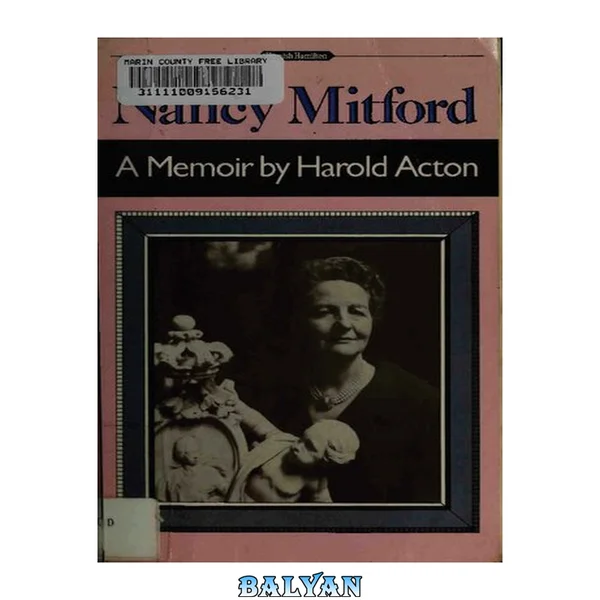
نانسی میتفورد: خاطرات
۴۹٬۰۰۰ تومان
Christmas Pudding. Nancy Mitford
۴۹٬۰۰۰ تومان
The Penguin Complete Novels of Nancy Mitford
۴۹٬۰۰۰ تومان
The bookseller's secret : A novel of nancy mitford and wwii
۴۹٬۰۰۰ تومان
Nancy Pelosi: A Biography (Greenwood Biographies)
۴۹٬۰۰۰ تومان
The Mayfair bookshop : a novel of Nancy Mitford and the pursuit of happiness
۴۹٬۰۰۰ تومان
قیمت نهایی
۴۴٬۰۰۰ تومان