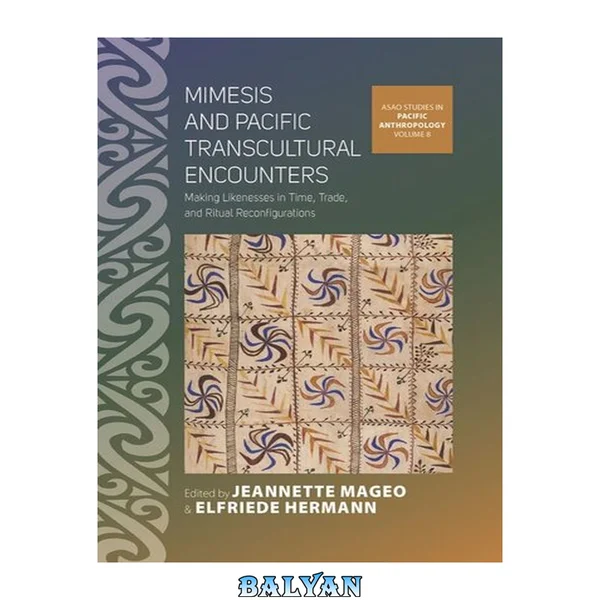
"This volume, the result of ongoing collaborations between Australian and French anthropologists, historians and linguists, explores encounters between Pacific peoples and foreigners during the longue duree of European exploration, colonisation and settlement from the sixteenth century to the twentieth century. It deploys the concept of 'encounter' rather than the more common idea of 'first contact' for several reasons. Encounters with Europeans occurred in the context of extensive prior encounters and exchanges between Pacific peoples, manifest in the distribution of languages and objects and in patterns of human settlement and movement. The concept of encounter highlights the mutuality in such meetings of bodies and minds, whereby preconceptions from both sides were brought into confrontation, dialogue, mutual influence and ultimately mutual transformation. It stresses not so much prior visions of 'strangers' or 'others' but the contingencies in events of encounter and how senses other than vision were crucial in shaping reciprocal appraisals. But a stress on mutual meanings and interdependent agencies in such cross-cultural encounters should not occlude the tumultuous misunderstandings, political contests and extreme violence which also characterised Indigenous-European interactions over this period."--Publisher's website Preface......Page 9 Acknowledgements......Page 11 Contributors......Page 13 List of Figures and Tables......Page 17 List of abbreviations and acronyms......Page 19 Prior Indigenous Encounters: Language, Culture and Power......Page 21 Before the Brush of Bodies – European Visions......Page 23 Oceanic Visions......Page 29 Double Visions and Alternative Senses......Page 31 The Passage of Time: Contingent Chronologies, Not Teleological Temporality......Page 33 The Unsettled Ground of Knowing: Histories and Ethnographies......Page 35 Reading “Against the Grain”: Partial Truths?......Page 36 Graphic Materialities and the Violence of Exchange......Page 40 The Place and Time of Oceania......Page 42 References......Page 46 FILMOGRAPHY......Page 55 Language Distribution in the Pacific......Page 57 The Vectors of Pacific Encounters with Outsiders......Page 60 Pre-Contact Encounters and Linguistic Responses......Page 63 Post-Contact Encounters and Linguistic Responses......Page 68 Globalisation and the Modern World......Page 72 References......Page 73 Introduction: An Archipelago of Names......Page 77 First Contact and the Beach: The Limen of Colonialism......Page 79 Pedro Fernández de Quirós, 1606: Salvation, Treasure and Phantasmagoria?......Page 80 The “Season of Observing”: Nature, Enlightened Explorations and Imperial Power......Page 93 Louis de Bougainville, A Voyage Round The World, 1768: “Such an Abuse of the Superiority of our Power”......Page 94 Captain James Cook, 1774 – Distantiation or Incorporation of the “Other”?......Page 99 “Monboddo’s Monkeys” and the “Ghosts of their Forebears”......Page 104 Green Boughs, Salt Water and Tumora, Towmarro......Page 106 Pacifying Exchanges and “The Power of our Jus Canonicum”......Page 110 On the Beach, Unsettled Colonies and “Dancing With Strangers”......Page 113 References......Page 117 A Reconsideration of the Role of Polynesian Women in Early Encounters with Europeans: Supplement to Marshall Sahlins’ Voyage around the Islands of History......Page 133 Samoa......Page 135 Tahiti......Page 137 The “girls” and the “sacrifice”: Comparison with Samoan ceremonies of the period 1830–1850......Page 139 “The blinds lowered”: Comparison with ethnography of the 1930s to 1980s......Page 141 The presence of the “women” and “very young girls”......Page 142 Nassau, April 7, 1768......Page 143 Fesche on April 7......Page 144 In the following days: Bougainville and Nassau......Page 146 “Tahitian Marriages” (Fesche)......Page 148 The youth of the victims and the ceremonial framework......Page 150 The question of virginity in the French accounts: The girls’ very young age, deflowering and tears......Page 151 “Without Asking For Any Reward”: From Ritual to Sexual Commerce (Fesche)......Page 152 The explicit nature of the French journals......Page 154 Hamilton in Tonga, 1791......Page 156 Captain Marchand in the northern Marquesas, 1791......Page 158 Conclusion (I): One Thing is Certain: Neither Love nor Pleasure......Page 159 The child of the god......Page 161 The three partners involved in conception......Page 162 “Very young age”: The question of the threshold of pubescence......Page 164 Conclusion (III): European Male Vision......Page 166 REFERENCES......Page 167 Introduction: How the South Sea Islands Were “Invented” Before They Were Discovered......Page 181 Missionary Fervour......Page 184 First Mission, First Setbacks......Page 185 Beachcombers and Castaways: Mercenaries, Wreckers and ... Teachers......Page 186 Learning to Read with the Bible......Page 187 The Role of Literacy in the First Missionary Successes......Page 188 Conclusion......Page 189 References......Page 190 Introduction......Page 195 Tale of a Voyage......Page 196 “By Their Conduct Toward Us” – Admiralty Islands, July–August 1792......Page 198 “Men So Close to Nature” – Van Diemen’s Land, February 1793......Page 202 “Hypocritical and Treacherous”/ A “Fine Race of Men” – Tongatapu, March–April 1793......Page 204 “Ferocious Savages” – New Caledonia, April–May 1793......Page 207 Race......Page 211 Conclusions......Page 212 REFERENCES......Page 213 Watkin Tench’s Fieldwork: The Journal of an “Ethnographer” in Port Jackson, 1788-1791......Page 219 Watkin Tench and his “Journal”......Page 222 Chronicles of the Encounters between British and Aborigines......Page 225 Tench’s Ambivalence: General Considerations on Aboriginal Society......Page 227 First Contacts......Page 229 Tench as an Ethnographer?......Page 230 Discrepancies of Description: Phillip’s Spearing......Page 231 References......Page 236 Encounters, Factual and Fictional......Page 241 Verisimilitude in the Fictional Encounter – A Brief History......Page 244 New Guinea, the “Last Unknown”......Page 245 The Premised Land: Imagining Interior New Guinea......Page 246 Moral Redemption: Louis Trégance Among the Orangwŏks......Page 252 Parodic Precision: The Wanderings of John Lawson......Page 254 The Last Colonial Imaginary......Page 263 References......Page 265 Black Powder, White Magic: European Armaments and Sorcery in Early Mekeo and Roro Encounters......Page 279 Background......Page 282 Luigi d’Albertis – “White Magician of the Mountain”......Page 284 C.A.W. Monckton – “Charmer of Rifles”......Page 291 After d’Albertis, Before Monckton......Page 293 Bramell’s Stockade, Sorcerers, Deadly Snakes and Monckton’s Charmed Rifles......Page 296 Contested Burials, Toothless Gums and Dirty Water......Page 298 Conclusion......Page 305 References......Page 306 A Measure of Violence: Forty Years of “First Contact” Among the Ankave-Anga (Papua New Guinea)......Page 315 Few Sources, So What?......Page 319 Gold and Order: The General Context of the Explorations among the Anga (Kukukuku)......Page 321 Europeans in Ankave Country......Page 323 Table 10.1 Administrative patrols in or around Ankave country (1929–72)......Page 324 Fragments of Ankave Memories......Page 326 Violence and Shells: A Process of Selective Remembrance?......Page 333 “Killers in Bark Capes”: Epitomising Stone Age Cannibals......Page 336 Violence is Good for the Others......Page 338 Conclusion......Page 343 References......Page 344 FILMOGRAPHY......Page 350
There is a vast literature on the principles of public administration and good governance, and no shortage of theoreticians, practitioners and donors eager to push for public sector reform, especially in less-developed countries. Papua New Guinea has had its share of public sector reforms, frequently under the influence of multinational agencies and aid donors. Yet there seems to be a general consensus, both within and outside Papua New Guinea, that policy making and implementation have fallen short of expectations, that there has been a failure to achieve 'good governance'. This volume, which brings together a number of Papua New Guinean and Australian-based scholars and practitioners with deep familiarity of policy making in Papua New Guinea, examines the record of policy making and implementation in Papua New Guinea since independence.It reviews the history of public sector reform in Papua New Guinea, and provides case studies of policy making and implementation in a number of areas, including the economy, agriculture, mineral development, health, education, lands, environment, forestry, decentralization, law and order, defence, women and foreign affairs, privatization, and AIDS. Policy is continuously evolving, but this study documents the processes of policy making and implementation over a number of years, with the hope that a better understanding of past successes and failures will contribute to improved governance in the future.
This volume, the result of ongoing collaborations between Australian and French anthropologists, historians and linguists, explores encounters between Pacific peoples and foreigners during the longue durée of European exploration, colonisation and settlement from the sixteenth century to the twentieth century. It deploys the concept of ?encounter? rather than the more common idea of ?first contact? for several reasons. Encounters with Europeans occurred in the context of extensive prior encounters and exchanges between Pacific peoples, manifest in the distribution of languages and objects and in patterns of human settlement and movement. The concept of encounter highlights the mutuality in such meetings of bodies and minds, whereby preconceptions from both sides were brought into confrontation, dialogue, mutual influence and ultimately mutual transformation. It stresses not so much prior visions of ?strangers? or ?others? but the contingencies in events of encounter and how senses other than vision were crucial in shaping reciprocal appraisals. But a stress on mutual meanings and interdependent agencies in such cross-cultural encounters should not occlude the tumultuous misunderstandings, political contests and extreme violence which also characterised Indigenous-European interactions over this period.