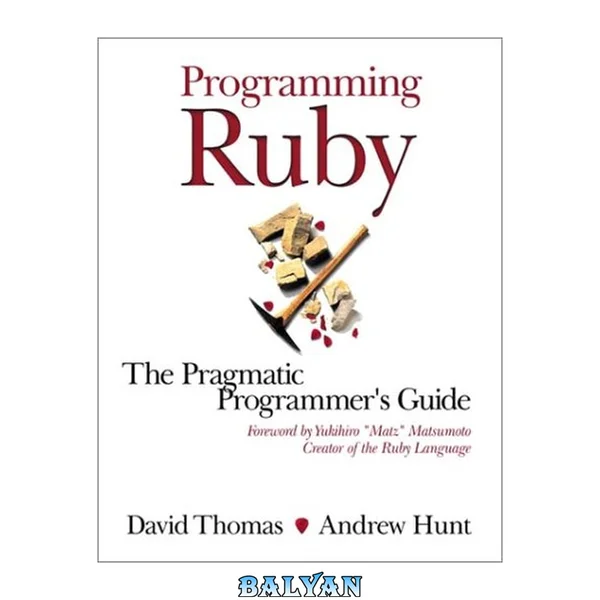
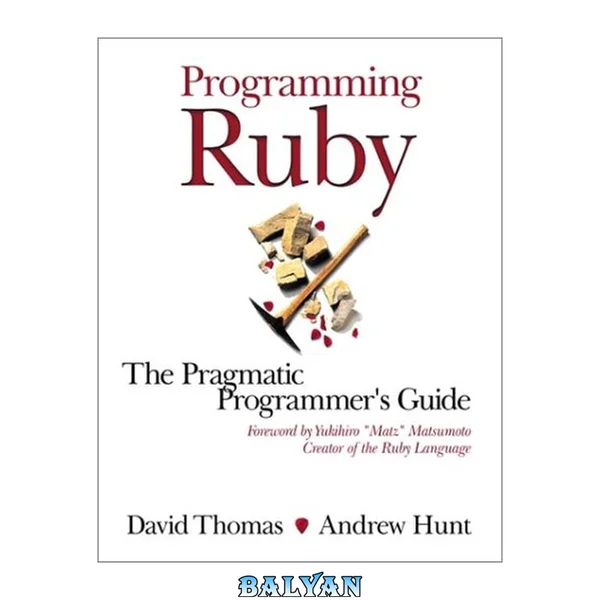
Ruby is one of the most important programming languages in use for web development. It powers the Rails framework, which is the backing of some of the most important sites on the web. The Pickaxe Book, named for the tool on the cover, is the definitive reference on Ruby, a highly-regarded, fully object-oriented programming language. This updated edition is a comprehensive reference on the language itself, with a tutorial on the most important features of Ruby - including pattern matching and Ractors - and describes the language through Ruby 3.2. Would you like to go from first idea to working code much, much faster? Do you currently spend more time satisfying the compiler instead of your clients or end users? Are you frustrated with demanding languages that seem to get in your way instead of helping you get the work done? Are you using Rails and want to dig deeper into the underlying Ruby language? If so, then we've got a language and book for you! Ruby is a fully object-oriented language. The combination of the power of a pure object-oriented language with the convenience of a scripting language makes Ruby a favorite tool of programmers that want to get things done quickly and cleanly. This comprehensive reference manual for Ruby includes a description of the most important standard library modules, built-in classes, and modules. It also includes all the new and changed syntax and semantics introduced through Ruby 3.2, including pattern matching and Ractors, and describes the language through Ruby 3.2. What You Need: This book assumes you have a basic understanding of object-oriented programming. In general, Ruby programmers tend to favor the the command line for running their code, and they tend to use text editors rather than IDEs. Ruby runs on Windows, Linux, and MacOS. Cover Table of Contents Change History Beta 3—March 28, 2023 Beta 2—January 24, 2023 Beta 1—October 26, 2022 Preface Why Ruby? A Word About Ruby Versions Notation Conventions Road Map Resources Part I—Facets of Ruby 1. Getting Started Installing Ruby Installing Ruby For Windows Running Ruby Creating Ruby Programs Getting More Information about Ruby What’s Next 2. Ruby.new Ruby Is an Object-Oriented Language Some Basic Ruby Arrays and Hashes Symbols Control Structures Regular Expressions Blocks Reading and ‘Riting Command-Line Arguments Commenting Ruby What’s Next 3. Classes, Objects, and Variables Defining Classes Objects and Attributes Classes Working with Other Classes Specifying Access Control Variables Reopening Classes What’s Next 4. Collections, Blocks, and Iterators Arrays Hashes Digging Word Frequency: Using Hashes and Arrays Blocks and Enumeration What’s Next 5. More About Methods Defining a Method Calling a Method What’s Next 6. Sharing Functionality: Inheritance, Modules, and Mixins Inheritance and Messages Modules Inheritance, Mixins, and Design What’s Next 7. Standard Types Numbers Strings Ranges What’s Next 8. Regular Expressions What Regular Expressions Let You Do Creating and Using Regular Expressions Regular Expression Patterns Regular Expression Syntax What’s Next 9. Expressions Operator Expressions Command Expressions Assignment Conditional Execution Loops and Iterators Pattern Matching What’s Next 10. Exceptions The Exception Class Handling Exceptions Raising Exceptions Using Catch and Throw What’s Next 11. Basic Input and Output What Is an IO Object? Opening and Closing Files Reading and Writing Files Talking to Networks What’s Next 12. Threads, Fibers, and Ractors Multithreading with Threads Running Multiple External Processes Creating Fibers Understanding Ractors What’s Next 13. Testing Ruby Code Why Unit Test? Testing With Minitest Structuring Tests Creating Mock Objects in Minitest Organizing and Running Tests Testing with RSpec What’s Next Part II—Ruby in Its Setting 14. Ruby from the Command Line Calling the Ruby Command Ruby Command-Line Options Making Your Code an Executable Program Processing Command-Line Arguments to Your Code Accessing Environment Variables Where Ruby Finds Its Libraries Using the Rake Build Tool The Build Environment What’s Next 15. Ruby Gems Installing and Managing Gems Using Bundler to Manage Groups of Gems Writing and Packaging Your Own Code Into Gems Organizing Your Source Code Distributing and Installing Your Code What’s Next 16. Interactive Ruby Using irb Navigating irb Configuring irb What’s Next 17. Debugging Ruby Printing Things The Ruby Debugger Pry Debugging Performance Issues with Benchmark What’s Next 18. Typed Ruby What’s a Type? Official Ruby Typing with RBS Ruby Typing with Sorbet What’s Next 19. Documenting Ruby Documenting with RDoc Adding RDoc to Ruby Code Running RDoc Documenting with YARD What’s Next Part III—Ruby Crystallized 20. Ruby and the Web Ruby’s Web Utilities Using the CGI Class to Handle Cookies Templating with ERB Serving Ruby Code to the Web Ruby in the Browser with Web Assembly What’s Next 21. Ruby Style Written Ruby Style Using RuboCop Using Standard Ruby Style in the Large Duck Typing What’s Next 22. Metaprogramming Understanding Objects and Classes Defining Singleton Methods Inheritance and Visibility Modules and Mixins Metaprogramming Class-Level Macros Using instance_eval and class_eval Using Hook Methods A Metaprogramming Example Top-Level Execution Environment What’s Next 23. Reflection and Object Space Looking at Objects Looking at Classes Calling Methods Dynamically System Hooks Tracing Your Program’s Execution Behind the Curtain: The Ruby VM Marshaling and Distributed Ruby What’s Next Part IV—Ruby Language Reference 24. Language Reference: Basic Types and Expressions Source Layout The Basic Types Regular Expressions Pattern Matching Variables Character Classes Names Variables and Constants Expressions, Conditionals, and Loops 25. Language Reference: Objects and Classes Method Definition Invoking a Method Aliasing Class Definition Module Definitions Access Control Blocks, Closures, and Proc Objects Exceptions Catch and Throw Typed Ruby Part V—Ruby Library Reference 26. Library Reference: Core Data Types Dates and Times Math Numbers Random and SecureRandom Regular Expressions Strings Symbols 27. Library Reference: Enumerators and Containers Array Enumerable Enumerator Hash Set 28. Library Reference: I/O 29. Library Reference: Meta Ruby Part VI—Appendixes A1. But It Doesn't Work! A2. I Can't Look It up! A3. Command-Line Basics A4. Ruby Runtimes Just In Time Compilers TruffleRuby JRuby mRuby Other Runtimes A5. Ruby Changes Version 2.0 Version 2.1 Version 2.2 Version 2.3 Version 2.4 Version 2.5 Version 2.6 Version 2.7 Version 3.0 Version 3.1 Version 3.2