
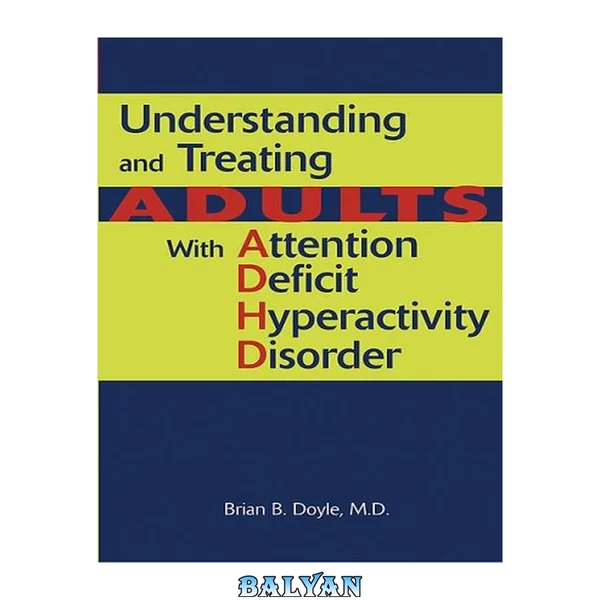
Understanding & Treating Adults with Attention Deficit Hyperactivity Disorder (ADHD)
Brian B. Doyleقیمت نهایی
- تخفیف زماندار−۹٬۰۰۰ تومان
۹٬۰۰۰ تومان صرفهجویی نسبت به قیمت اصلی
بلافاصله پس از خرید، فایل کتاب روی دستگاه شما آمادهٔ دانلود است.
نسخه اصلی و اورجینال
فایل دیجیتال کامل و بدون دستکاری — همان نسخهای که پس از خرید دریافت میکنید.
مشخصات کتاب
- نویسنده
- Brian B. Doyle
- سال انتشار
- ۲۰۰۶
- فرمت
- زبان
- انگلیسی
- حجم فایل
- ۲٫۹ مگابایت
دربارهٔ کتاب
An estimated seven million American adults have attention deficit hyperactivity disorder. Understanding and Treating Adults With Attention Deficit Hyperactivity Disorder provides accurate, timely information about the nature and treatment of this disorder. Written in a collegial style, this resource combines evidence-based material with clinical experience to address problems in diagnosing and treating adults with ADHD. Dr. Doyle shows how diagnostic and treatment methods in children with ADHD also apply to affected adults. He examines the role of medications, including new agents that expand the range of therapeutic choices.
Understanding the evolution of the concept and treatment of ADHD in children illuminates current thinking about the disorder in adults. Dr. Doyle presents guidelines for establishing a valid diagnosis, including clinical interviews and standardized rating scales. He covers genetic and biochemical bases of the disorder. He also addresses the special challenges of forming a therapeutic alliance—working with coach caregivers; cultural, ethnic, and racial issues; legal considerations; and countertransference issues.
He explores a range of options for treating adult ADHD:
• Detailed facts about using medication, with specific information on both CNS stimulants and nonstimulant medications. He also discusses highly touted medications that are actually ineffective.
• Full coverage of comprehensive treatment approaches beyond medication—focusing on cognitive behavioral therapies, among others. He uses a detailed clinical example drawn from several patients to illustrate issues involved in treating ADHD adults over time.
• Complete review of conditions that may require treatment before ADHD can be addressed. Many ADHD adults struggle with comorbid anxiety, affective disorders, and substance abuse. Dr. Doyle explains how overlooked ADHD can complicate the treatment of other disorders. He provides strategies for the patient with medication-resistant or treatment-refractory ADHD.
The book provides in-depth discussion of such issues as the impact of ADHD in the workplace, including steps for maximizing job satisfaction; special considerations related to women; and the effect of ADHD on families. A useful appendix helps readers and patients find reliable information about ADHD on the Internet, allowing clinicians to develop an e-prescription to supplement medication and other interventions.
Dr. Doyle advocates the promise of enhanced life prospects for adults with ADHD that effective treatment provides. Besides addressing the special challenges of ADHD adults, Dr. Doyle conveys the rewards of working with patients who prove resourceful, creative, and persistent.
Doody Review ServicesReviewer:Regina Rosa Lopez, MD(University of Illinois at Chicago College of Medicine)
Description:This book provides a practical approach to the diagnosis and treatment of ADHD in adults and discusses the challenges clinicians encounter when treating this patient population.
Purpose:According to the author, the purpose is to provide accurate, timely information about the nature of ADHD and its treatment in adults. These objectives are worthy given the fact that a majority of the literature on ADHD is focused on children and adolescents. The author meets his objectives.
Audience:Clinicians who treat ADHD in either adults or children and adolescents would be the audience for this book. The author is a clinical professor of psychiatry and of family and community medicine at Georgetown University Medical School.
Features:The book primarily covers the diagnostic and treatment difficulties of adult ADHD. Included is a comprehensive overview of the biology of ADHD. The book also addresses the special considerations such as psychiatric comorbidities, treatment-refractory ADHD, and issues related to women and the family. The neuroanatomic and functional neuroimaging studies are covered well. The book is easy to read and understand. A unique appendix contains Internet resources and quality ratings of these web sites. The clinical examples, in my opinion, seem unnecessary. They do not contribute much to the content. Also, there are few tables and figures. Figures would better illustrate material in the biology chapter. Finally, the psychopharmacology is not thorough enough for practicing psychiatrists.
Assessment:The book is good as a concise, practical guide to the diagnosis and treatment of adults with ADHD. It is useful in helping distinguish ADHD in adults versus children and adolescents, and it gets readers to consider special challenges in this patient population.
An estimated seven million American adults have attention deficit hyperactivity disorder. Understanding and Treating Adults With Attention Deficit Hyperactivity Disorder provides accurate, timely information about the nature and treatment of this disorder. Written in a collegial style, this resource combines evidence-based material with clinical experience to address problems in diagnosing and treating adults with ADHD. Dr. Doyle shows how diagnostic and treatment methods in children with ADHD also apply to affected adults. He examines the role of medications, including new agents that expand the range of therapeutic choices.
Understanding the evolution of the concept and treatment of ADHD in children illuminates current thinking about the disorder in adults. Dr. Doyle presents guidelines for establishing a valid diagnosis, including clinical interviews and standardized rating scales. He covers genetic and biochemical bases of the disorder. He also addresses the special challenges of forming a therapeutic alliance -- working with "coach" caregivers; cultural, ethnic, and racial issues; legal considerations; and countertransference issues.
He explores a range of options for treating adult ADHD: Detailed facts about using medication, with specific information on both CNS stimulants and nonstimulant medications. He also discusses highly touted medications that are actually ineffective.
Full coverage of comprehensive treatment approaches beyond medication -- focusing on cognitive behavioral therapies, among others. He uses a detailed clinical example drawn from several patients to illustrate issues involved in treating ADHD adults over time.
Complete review of conditions that may require treatment before ADHD can be addressed. Many ADHD adults struggle with comorbid anxiety, affective disorders, and substance abuse. Dr. Doyle explains how overlooked ADHD can complicate the treatment of other disorders. He provides strategies for the patient with medication-resistant or treatment-refractory ADHD.
The book provides in-depth discussion of such issues as the impact of ADHD in the workplace, including steps for maximizing job satisfaction; special considerations related to women; and the effect of ADHD on families. A useful appendix helps readers and patients find reliable information about ADHD on the Internet, allowing clinicians to develop an "e-prescription" to supplement medication and other interventions.
Dr. Doyle advocates the promise of enhanced life prospects for adults with ADHD that effective treatment provides. Besides addressing the special challenges of ADHD adults, Dr. Doyle conveys the rewards of working with patients who prove resourceful, creative, and persistent.
An estimated seven million American adults have attention deficit hyperactivity disorder. Understanding and Treating Adults With Attention Deficit Hyperactivity Disorder provides accurate, timely information about the nature and treatment of this disorder. Written in a collegial style, this resource combines evidence-based material with clinical experience to address problems in diagnosing and treating adults with ADHD. Dr. Doyle shows how diagnostic and treatment methods in children with ADHD also apply to affected adults. He examines the role of medications, including new agents that expand the range of therapeutic choices. Understanding the evolution of the concept and treatment of ADHD in children illuminates current thinking about the disorder in adults. Dr. Doyle presents guidelines for establishing a valid diagnosis, including clinical interviews and standardized rating scales. He covers genetic and biochemical bases of the disorder. He also addresses the special challenges of forming a therapeutic alliance — working with "coach" caregivers; cultural, ethnic, and racial issues; legal considerations; and countertransference issues. He explores a range of options for treating adult ADHD: Detailed facts about using medication, with specific information on both CNS stimulants and nonstimulant medications. He also discusses highly touted medications that are actually ineffective. Full coverage of comprehensive treatment approaches beyond medication — focusing on cognitive behavioral therapies, among others. He uses a detailed clinical example drawn from several patients to illustrate issues involved in treating ADHD adults over time. Complete review of conditions that may require treatment before ADHD can be addressed. Many ADHD adults struggle with comorbid anxiety, affective disorders, and substance abuse. Dr. Doyle explains how overlooked ADHD can complicate the treatment of other disorders. He provides strategies for the patient with medication-resistant or treatment-refractory ADHD. The book provides in-depth discussion of such issues as the impact of ADHD in the workplace, including steps for maximizing job satisfaction; special considerations related to women; and the effect of ADHD on families. A useful appendix helps readers and patients find reliable information about ADHD on the Internet, allowing clinicians to develop an "e-prescription" to supplement medication and other interventions. Dr. Doyle advocates the promise of enhanced life prospects for adults with ADHD that effective treatment provides. Besides addressing the special challenges of ADHD adults, Dr. Doyle conveys the rewards of working with patients who prove resourceful, creative, and persistent. An estimated seven million American adults have Attention Deficit Hyperactivity Disorder (ADHD). Understanding & Treating Adults with Attention Deficit Hyperactivity Disorder provides accurate, timely information about the nature & treatment. Written in a collegial style, this resource combines evidence-based material with clinical experience to address problems in diagnosing & treating adults with ADHD. Dr. Doyle shows how diagnostic & treatment methods in children with ADHD also apply to affected adults. He examines the role of medications, including new agents that expand the range of therapeutic choices. Understanding the evolution of the concept and treatment of ADHD in children illuminates current thinking about the disorder in adults. Dr. Doyle presents guidelines for establishing a valid diagnosis, including clinical interviews & standardized rating scales. He covers genetic and biochemical bases of the disorder. He also addresses the special challenges of forming a therapeutic alliance - working with "coach" caregivers; cultural, ethnic, & racial issues; legal considerations; & counter-transference issues. He explores a range of options for treating adult ADHD: Detailed facts about using medication, with specific information on both CNS stimulants & non-stimulant medications. He also discusses highly touted medications that are actually ineffective. Full coverage of comprehensive treatment approaches beyond medication - focusing on cognitive behavioral therapies, among others. He uses a detailed clinical example drawn from several patients to illustrate issues involved in treating ADHD adults over time. Complete review of conditions that may require treatment before ADHD can be addressed. Many ADHD adults struggle with comorbid anxiety, affective disorders, & substance abuse. He explains how overlooked ADHD can complicate the treatment of other disorders. He provides strategies for the patient with medication-resistant or treatment-refractory ADHD. The book provides in-depth discussion of such issues as the impact of ADHD in the workplace, including steps for maximizing job satisfaction; special considerations related to women; and the effect of ADHD on families. A useful appendix helps readers & patients find reliable information about ADHD on the Internet, allowing clinicians to develop an "e-prescription" to supplement medication & other interventions. Dr. Doyle advocates the promise of enhanced life prospects for adults with ADHD that effective treatment provides. Besides addressing the special challenges of ADHD adults, he conveys the rewards of working with patients who prove resourceful, creative, & persistent. Contents......Page 6 Preface......Page 8 Acknowledgments......Page 12 1 ADHD in Children and Adults......Page 14 2 Diagnosing ADHD in Adults......Page 40 3 The Biological Basis of ADHD......Page 78 4 Allies in Treatment......Page 110 5 Treating Adult ADHD With Medication: Introduction......Page 130 6 Treating ADHD With Central Nervous System Stimulants......Page 138 7 Treating ADHD With Nonstimulant Medications......Page 194 8 Comprehensive Treatment of the Adult With ADHD......Page 218 9 Comorbid and Treatment-Refractory ADHD......Page 238 10 ADHD Issues: Work, Women, and Family......Page 290 Appendix......Page 326 A......Page 336 B......Page 338 C......Page 339 D......Page 342 E......Page 343 F......Page 344 H......Page 345 M......Page 346 N......Page 348 P......Page 349 R......Page 351 S......Page 352 U......Page 354 Z......Page 355 This book shows that with effective treatment, many affected adults can lead fuller, more satisfying lives. This authoritative volume addresses difficulties in diagnosing adult ADHD, including the debate about whether the disorder exists as a valid entity. Dr. Doyle covers the genetic and biochemical bases of the disorder and explains how understanding ADHD in children illuminates current thinking about the disorder in adults. He covers the full range of medications for ADHD "This volume addresses difficulties in diagnosing adult ADHD, including the debate about whether the disorder exists as a valid entity. Brian Doyle covers the genetic and biochemical bases of the disorder and explains how understanding ADHD in children illuminates current thinking about the disorder in adults."کتابهای مشابه
درک و درمان بزرگسالان مبتلا به اختلال کمتوجهی و بیشفعالی (ADHD)
۴۹٬۰۰۰ تومان

Attention Deficit Hyperactivity Disorder (ADHD)
۴۹٬۰۰۰ تومان
ADHD Attention Deficit Hyperactivity Disorder (Mental Illnesses and Disorders: Awareness and Understanding)
۴۹٬۰۰۰ تومان
Understanding ADHD : attention deficit hyperactivity disorder illustrated by Roger Roberts
۴۹٬۰۰۰ تومان
Winning with ADHD: A Playbook for Teens and Young Adults with Attention Deficit/Hyperactivity Disorder
۴۹٬۰۰۰ تومان
Handbook of Attention Deficit Hyperactivity Disorder
۴۹٬۰۰۰ تومان
Handbook for Attention Deficit Hyperactivity Disorder in Adults [recurso electrónico
۴۹٬۰۰۰ تومان
Handbook of Attention Deficit Hyperactivity Disorder
۴۹٬۰۰۰ تومان
Attention, genes and attention deficit hyperactivity disorder
۴۹٬۰۰۰ تومان
Encyclopedia of Attention Deficit Hyperactivity Disorders
۴۹٬۰۰۰ تومان
Assessing attention-deficit hyperactivity disorder
۴۹٬۰۰۰ تومان
Encyclopedia of Attention Deficit Hyperactivity Disorders
۴۹٬۰۰۰ تومان
قیمت نهایی
۴۰٬۰۰۰ تومان