
Visual Basic .NET : class design handbook : [coding effective classes
Richard Conway; Teun Duynstee; Ben Hyrman; Roger Rowland; James Speerقیمت نهایی
نسخه اصلی و اورجینال
بلافاصله پس از خرید، فایل کتاب روی دستگاه شما آمادهٔ دانلود است.
مشخصات کتاب
- سال انتشار
- ۲۰۰۲
- فرمت
- زبان
- انگلیسی
- حجم فایل
- ۴٫۸ مگابایت
- شابک
- 9781430211242، 9781590592571، 9781861007087، 1430211245، 1590592573، 1861007086
دربارهٔ کتاب
the Mission Of The C# Class Design Handbook Is To Provide You With A Critical Understanding Of Designing Classes, Making You Better Equipped To Take Full Advantage Of C# S Power To Create Robust, Flexible, Reusable Classes. This Comprehensive Guide Lifts The Lid On Syntax And Examines What S Really Going On Behind The Scenes. Specific Topics Include The Role Of Types In .net, The Different Kinds Of Types C# Can Create, The Fundamental Role Of Methods As Containers Of Program Logic, And The Workings Behind .net S Delegate-based Event System. It Will Also Show You How To Control And Exploit Inheritance In Your Types And How To Create Logical And Physical Code Organization Through Namespaces And Assemblies.
Designing Clasees That Don T Have To Be Revisited And Revised Over And Over Again Is An Art. This Handbook Aims To Put That Art In Your Hands, Giving You A Deeper Understanding Of The Decisions You Must Make To Design Classes, And Design Them Effectively.
The mission of the C♯ Class Design Handbook is to provide you with a critical understanding of designing classes, making you better equipped to take full advantage of C#s power to create robust, flexible, reusable classes. This comprehensive guide lifts the lid on syntax and examines what's really going on behind the scenes. Specific topics include the role of types in .NET, the different kinds of types C♯ can create, the fundamental role of methods as containers of program logic, and the workings behind .NETs delegate-based event system. It will also show you how to control and exploit inheritance in your types and how to create logical and physical code organization through namespaces and assemblies. Designing classes that don't have to be revisited and revised over and over again is an art. This handbook aims to put that art in your hands, giving you a deeper understanding of the decisions you must make to design classes, and design them effectively * Gives you a deep understanding of the implications of every decision you can make in designing a class, so you are better equipped to take full advantage of C#’s power to create robust, flexible, reusable classes * Lifts the lid on the simple syntax and examines what it really does behind the scenes * Covers all the fundamentals on classes: the role of types in .NET, the different kinds of type C# creates, fundamental role of methods as containers of program logic, how .NET’s delegate-based event system works, how to control and exploit inheritance in your types, and logical and physical code organization through namespaces and assemblies. This book is a great example of the quality literature one expects from Apress. It delves into topics covered in most books on C#, but with an eye strictly toward class design and functionality. The authors have done a great job and the book reads as if it was written by one voice instead of five. A must read for all beginners. At the heart of .NET programming in C# is the task of building classes. This book is a guide to help readers design these classes effectively, by looking at what control we have over our classes, and how C# turns our class definitions into executable code.کتابهای مشابه

Visual Basic .NET : class design handbook : [coding effective classes
۴۹٬۰۰۰ تومان
Visual Basic .NET : class design handbook : [coding effective classes
۴۹٬۰۰۰ تومان
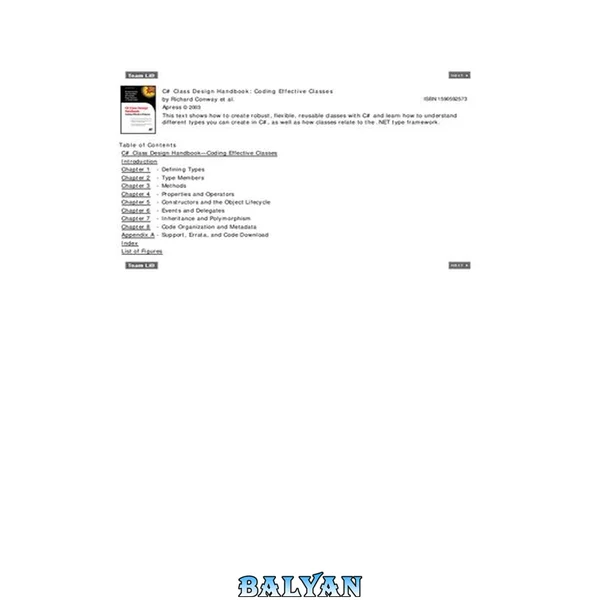
Visual Basic .NET : class design handbook : [coding effective classes
۴۹٬۰۰۰ تومان

راهنمای طراحی کلاس در ویژوال بیسیک .NET: کدنویسی کلاسهای مؤثر؛ [یاد بگیرید چگونه کلاسهای مقاوم، انعطافپذیر و قابل استفاده مجدد با ویژوال بیسیک .NET ایجاد کنید؛ انواع مختلف و نحوه ارتباط کلاسها با چارچوب نوع .NET را درک کنید؛ ببینید چگونه .NET
۴۹٬۰۰۰ تومان
Designing Visual Basic. NET Applications
۴۹٬۰۰۰ تومان
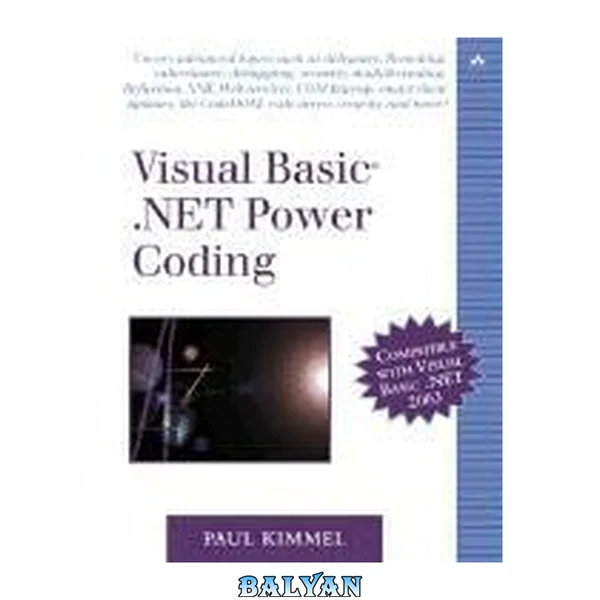
Visual Basic(R) .NET Power Coding
۴۹٬۰۰۰ تومان
Visual Basic .NET
۴۹٬۰۰۰ تومان
ویژوال بیسیک. نت
۴۹٬۰۰۰ تومان
Visual Basic .NET
۴۹٬۰۰۰ تومان
Visual Basic NET - Developing Microsoft Net Applications for Windows with Visual Basic Net
۴۹٬۰۰۰ تومان
.NET Enterprise Design with Visual Basic .NET and SQL Server 2000
۴۹٬۰۰۰ تومان
ویژوال بیسیک داتنت: برنامهنویسی با مایکروسافت ویاس داتنت: راهنمای تحویل (همراه با کد)
۴۹٬۰۰۰ تومان
قیمت نهایی
۴۹٬۰۰۰ تومان