
Real-Time Rendering, Fourth Edition
Freida McFadden، Tomas Akenine-Möller, Eric Haines, Naty Hoffman, A. Pesce, M. Iwanicki, S. Hillaireقیمت نهایی
۴۰٬۰۰۰ تومان۴۹٬۰۰۰ تومان۱۸٪ تخفیف
- تخفیف زماندار−۹٬۰۰۰ تومان
۹٬۰۰۰ تومان صرفهجویی نسبت به قیمت اصلی
نسخه اصلی و اورجینال
بلافاصله پس از خرید، فایل کتاب روی دستگاه شما آمادهٔ دانلود است.
تحویل فوری
پرداخت امن
ضمانت فایل
پشتیبانی
مشخصات کتاب
- نویسنده
- Freida McFadden، Tomas Akenine-Möller, Eric Haines, Naty Hoffman, A. Pesce, M. Iwanicki, S. Hillaire
- سال انتشار
- ۲۰۱۸
- فرمت
- زبان
- انگلیسی
- حجم فایل
- ۳۵٫۵ مگابایت
- شابک
- 9780429225406، 9781138627000، 9781315212593، 9781351816137، 9781351816144، 9781351816151، 0429225407، 1138627003، 1315212595، 1351816136، 1351816144، 1351816152
دربارهٔ کتاب
Thoroughly updated, this fourth edition focuses on modern techniques used to generate synthetic three-dimensional images in a fraction of a second. With the advent of programmable shaders, a wide variety of new algorithms have arisen and evolved over the past few years. This edition discusses current, practical rendering methods used in games and other applications. It also presents a solid theoretical framework and relevant mathematics for the field of interactive computer graphics, all in an approachable style. New to this edition: new chapter on VR and AR as well as expanded coverage of Visual Appearance, Advanced Shading, Global Illumination, and Curves and Curved Surfaces. Source: publisher information Cover ......Page 1 Half title ......Page 2 Title ......Page 4 Copyright ......Page 5 Dedication ......Page 6 Contents......Page 8 Preface......Page 14 Chapter 1 Introduction......Page 22 1.1 Contents Overview......Page 24 1.2 Notation and De nitions......Page 26 Chapter 2 The Graphics Rendering Pipeline......Page 32 2.1 Architecture......Page 33 2.2 The Application Stage......Page 34 2.3 Geometry Processing......Page 35 2.4 Rasterization......Page 42 2.5 Pixel Processing......Page 43 2.6 Through the Pipeline......Page 46 Chapter 3 The Graphics Processing Unit......Page 50 3.1 Data-Parallel Architectures......Page 51 3.2 GPU Pipeline Overview......Page 55 3.3 The Programmable Shader Stage......Page 56 3.4 The Evolution of Programmable Shading and APIs......Page 58 3.5 The Vertex Shader......Page 63 3.6 The Tessellation Stage......Page 65 3.7 The Geometry Shader......Page 68 3.8 The Pixel Shader......Page 70 3.9 The Merging Stage......Page 74 3.10 The Compute Shader......Page 75 Chapter 4 Transforms......Page 78 4.1 Basic Transforms......Page 79 4.2 Special Matrix Transforms and Operations......Page 91 4.3 Quaternions......Page 97 4.4 Vertex Blending......Page 105 4.5 Morphing......Page 108 4.7 Projections......Page 113 5.1 Shading Models......Page 124 5.2 Light Sources......Page 127 5.3 Implementing Shading Models......Page 138 5.4 Aliasing and Antialiasing......Page 151 5.5 Transparency, Alpha, and Compositing......Page 169 5.6 Display Encoding......Page 181 Chapter 6 Texturing......Page 188 6.1 The Texturing Pipeline......Page 190 6.2 Image Texturing......Page 197 6.3 Procedural Texturing......Page 219 6.4 Texture Animation......Page 221 6.5 Material Mapping......Page 222 6.6 Alpha Mapping......Page 223 6.7 Bump Mapping......Page 229 6.8 Parallax Mapping......Page 235 6.9 Textured Lights......Page 242 Chapter 7 Shadows......Page 244 7.1 Planar Shadows......Page 246 7.2 Shadows on Curved Surfaces......Page 250 7.3 Shadow Volumes......Page 251 7.4 Shadow Maps......Page 255 7.5 Percentage-Closer Filtering......Page 268 7.6 Percentage-Closer Soft Shadows......Page 271 7.7 Filtered Shadow Maps......Page 273 7.8 Volumetric Shadow Techniques......Page 278 7.9 Irregular Z-Bu er Shadows......Page 280 7.10 Other Applications......Page 283 8.1 Light Quantities......Page 288 8.2 Scene to Screen......Page 302 9.1 Physics of Light......Page 314 9.2 The Camera......Page 328 9.3 The BRDF......Page 329 9.4 Illumination......Page 336 9.5 Fresnel Re ectance......Page 337 9.6 Microgeometry......Page 348 9.7 Microfacet Theory......Page 352 9.8 BRDF Models for Surface Re ection......Page 357 9.9 BRDF Models for Subsurface Scattering......Page 368 9.10 BRDF Models for Cloth......Page 377 9.11 Wave Optics BRDF Models......Page 380 9.12 Layered Materials......Page 384 9.13 Blending and Filtering Materials......Page 386 Chapter 10 Local Illumination......Page 396 10.1 Area Light Sources......Page 398 10.2 Environment Lighting......Page 412 10.3 Spherical and Hemispherical Functions......Page 413 10.4 Environment Mapping......Page 425 10.5 Specular Image-Based Lighting......Page 435 10.6 Irradiance Environment Mapping......Page 445 10.7 Sources of Error......Page 454 11.1 The Rendering Equation......Page 458 11.2 General Global Illumination......Page 462 11.3 Ambient Occlusion......Page 467 11.4 Directional Occlusion......Page 486 11.5 Di use Global Illumination......Page 493 11.6 Specular Global Illumination......Page 518 11.7 Uni ed Approaches......Page 530 12.1 Image Processing......Page 534 12.2 Reprojection Techniques......Page 543 12.3 Lens Flare and Bloom......Page 545 12.4 Depth of Field......Page 548 12.5 Motion Blur......Page 557 13.1 The Rendering Spectrum......Page 566 13.2 Fixed-View E ects......Page 567 13.3 Skyboxes......Page 568 13.4 Light Field Rendering......Page 570 13.5 Sprites and Layers......Page 571 13.6 Billboarding......Page 572 13.7 Displacement Techniques......Page 585 13.8 Particle Systems......Page 588 13.9 Point Rendering......Page 593 13.10 Voxels......Page 599 14.1 Light Scattering Theory......Page 610 14.2 Specialized Volumetric Rendering......Page 621 14.3 General Volumetric Rendering......Page 626 14.4 Sky Rendering......Page 634 14.5 Translucent Surfaces......Page 644 14.6 Subsurface Scattering......Page 653 14.7 Hair and Fur......Page 661 14.8 Uni ed Approaches......Page 669 Chapter 15 Non-Photorealistic Rendering......Page 672 15.1 Toon Shading......Page 673 15.2 Outline Rendering......Page 675 15.3 Stroke Surface Stylization......Page 690 15.4 Lines......Page 694 15.5 Text Rendering......Page 696 Chapter 16 Polygonal Techniques......Page 702 16.1 Sources of Three-Dimensional Data......Page 703 16.2 Tessellation and Triangulation......Page 704 16.3 Consolidation......Page 711 16.4 Triangle Fans, Strips, and Meshes......Page 717 16.5 Simpli cation......Page 727 16.6 Compression and Precision......Page 733 Chapter 17 Curves and Curved Surfaces......Page 738 17.1 Parametric Curves......Page 739 17.2 Parametric Curved Surfaces......Page 755 17.3 Implicit Surfaces......Page 770 17.4 Subdivision Curves......Page 774 17.5 Subdivision Surfaces......Page 777 17.6 Ecient Tessellation......Page 788 Chapter 18 Pipeline Optimization......Page 804 18.1 Pro ling and Debugging Tools......Page 805 18.2 Locating the Bottleneck......Page 807 18.3 Performance Measurements......Page 809 18.4 Optimization......Page 811 18.5 Multiprocessing......Page 826 Chapter 19 Acceleration Algorithms......Page 838 19.1 Spatial Data Structures......Page 839 19.2 Culling Techniques......Page 851 19.3 Backface Culling......Page 852 19.4 View Frustum Culling......Page 856 19.5 Portal Culling......Page 858 19.6 Detail and Small Triangle Culling......Page 860 19.7 Occlusion Culling......Page 861 19.8 Culling Systems......Page 871 19.9 Level of Detail......Page 873 19.10 Rendering Large Scenes......Page 887 Chapter 20 Ecient Shading......Page 902 20.1 Deferred Shading......Page 904 20.2 Decal Rendering......Page 909 20.3 Tiled Shading......Page 913 20.4 Clustered Shading......Page 919 20.5 Deferred Texturing......Page 926 20.6 Object- and Texture-Space Shading......Page 929 Chapter 21 Virtual and Augmented Reality......Page 936 21.1 Equipment and Systems Overview......Page 937 21.2 Physical Elements......Page 940 21.3 APIs and Hardware......Page 945 21.4 Rendering Techniques......Page 953 Chapter 22 Intersection Test Methods......Page 962 22.1 GPU-Accelerated Picking......Page 963 22.2 De nitions and Tools......Page 964 22.3 Bounding Volume Creation......Page 969 22.4 Geometric Probability......Page 974 22.5 Rules of Thumb......Page 975 22.6 Ray/Sphere Intersection......Page 976 22.7 Ray/Box Intersection......Page 980 22.8 Ray/Triangle Intersection......Page 983 22.9 Ray/Polygon Intersection......Page 987 22.10 Plane/Box Intersection......Page 991 22.11 Triangle/Triangle Intersection......Page 993 22.12 Triangle/Box Intersection......Page 995 22.13 Bounding-Volume/Bounding-Volume Intersection......Page 997 22.14 View Frustum Intersection......Page 1002 22.15 Line/Line Intersection......Page 1008 22.16 Intersection between Three Planes......Page 1011 23.1 Rasterization......Page 1014 23.2 Massive Compute and Scheduling......Page 1023 23.3 Latency and Occupancy......Page 1025 23.4 Memory Architecture and Buses......Page 1027 23.5 Caching and Compression......Page 1028 23.6 Color Bu ering......Page 1030 23.7 Depth Culling, Testing, and Bu ering......Page 1035 23.8 Texturing......Page 1038 23.9 Architecture......Page 1040 23.10 Case Studies......Page 1045 23.11 Ray Tracing Architectures......Page 1060 Chapter 24 The Future......Page 1062 24.1 Everything Else......Page 1063 24.2 You......Page 1067 Bibliography......Page 1072 Index......Page 1176 Cover 1 Half title 2 Title 4 Copyright 5 Dedication 6 Contents 8 Preface 14 Chapter 1 Introduction 22 1.1 Contents Overview 24 1.2 Notation and De nitions 26 Chapter 2 The Graphics Rendering Pipeline 32 2.1 Architecture 33 2.2 The Application Stage 34 2.3 Geometry Processing 35 2.4 Rasterization 42 2.5 Pixel Processing 43 2.6 Through the Pipeline 46 Chapter 3 The Graphics Processing Unit 50 3.1 Data-Parallel Architectures 51 3.2 GPU Pipeline Overview 55 3.3 The Programmable Shader Stage 56 3.4 The Evolution of Programmable Shading and APIs 58 3.5 The Vertex Shader 63 3.6 The Tessellation Stage 65 3.7 The Geometry Shader 68 3.8 The Pixel Shader 70 3.9 The Merging Stage 74 3.10 The Compute Shader 75 Chapter 4 Transforms 78 4.1 Basic Transforms 79 4.2 Special Matrix Transforms and Operations 91 4.3 Quaternions 97 4.4 Vertex Blending 105 4.5 Morphing 108 4.6 Geometry Cache Playback 113 4.7 Projections 113 Chapter 5 Shading Basics 124 5.1 Shading Models 124 5.2 Light Sources 127 5.3 Implementing Shading Models 138 5.4 Aliasing and Antialiasing 151 5.5 Transparency, Alpha, and Compositing 169 5.6 Display Encoding 181 Chapter 6 Texturing 188 6.1 The Texturing Pipeline 190 6.2 Image Texturing 197 6.3 Procedural Texturing 219 6.4 Texture Animation 221 6.5 Material Mapping 222 6.6 Alpha Mapping 223 6.7 Bump Mapping 229 6.8 Parallax Mapping 235 6.9 Textured Lights 242 Chapter 7 Shadows 244 7.1 Planar Shadows 246 7.2 Shadows on Curved Surfaces 250 7.3 Shadow Volumes 251 7.4 Shadow Maps 255 7.5 Percentage-Closer Filtering 268 7.6 Percentage-Closer Soft Shadows 271 7.7 Filtered Shadow Maps 273 7.8 Volumetric Shadow Techniques 278 7.9 Irregular Z-Bu er Shadows 280 7.10 Other Applications 283 Chapter 8 Light and Color 288 8.1 Light Quantities 288 8.2 Scene to Screen 302 Chapter 9 Physically Based Shading 314 9.1 Physics of Light 314 9.2 The Camera 328 9.3 The BRDF 329 9.4 Illumination 336 9.5 Fresnel Re ectance 337 9.6 Microgeometry 348 9.7 Microfacet Theory 352 9.8 BRDF Models for Surface Re ection 357 9.9 BRDF Models for Subsurface Scattering 368 9.10 BRDF Models for Cloth 377 9.11 Wave Optics BRDF Models 380 9.12 Layered Materials 384 9.13 Blending and Filtering Materials 386 Chapter 10 Local Illumination 396 10.1 Area Light Sources 398 10.2 Environment Lighting 412 10.3 Spherical and Hemispherical Functions 413 10.4 Environment Mapping 425 10.5 Specular Image-Based Lighting 435 10.6 Irradiance Environment Mapping 445 10.7 Sources of Error 454 Chapter 11 Global Illumination 458 11.1 The Rendering Equation 458 11.2 General Global Illumination 462 11.3 Ambient Occlusion 467 11.4 Directional Occlusion 486 11.5 Di use Global Illumination 493 11.6 Specular Global Illumination 518 11.7 Uni ed Approaches 530 Chapter 12 Image-Space E ects 534 12.1 Image Processing 534 12.2 Reprojection Techniques 543 12.3 Lens Flare and Bloom 545 12.4 Depth of Field 548 12.5 Motion Blur 557 Chapter 13 Beyond Polygons 566 13.1 The Rendering Spectrum 566 13.2 Fixed-View E ects 567 13.3 Skyboxes 568 13.4 Light Field Rendering 570 13.5 Sprites and Layers 571 13.6 Billboarding 572 13.7 Displacement Techniques 585 13.8 Particle Systems 588 13.9 Point Rendering 593 13.10 Voxels 599 Chapter 14 Volumetric and Translucency Rendering 610 14.1 Light Scattering Theory 610 14.2 Specialized Volumetric Rendering 621 14.3 General Volumetric Rendering 626 14.4 Sky Rendering 634 14.5 Translucent Surfaces 644 14.6 Subsurface Scattering 653 14.7 Hair and Fur 661 14.8 Uni ed Approaches 669 Chapter 15 Non-Photorealistic Rendering 672 15.1 Toon Shading 673 15.2 Outline Rendering 675 15.3 Stroke Surface Stylization 690 15.4 Lines 694 15.5 Text Rendering 696 Chapter 16 Polygonal Techniques 702 16.1 Sources of Three-Dimensional Data 703 16.2 Tessellation and Triangulation 704 16.3 Consolidation 711 16.4 Triangle Fans, Strips, and Meshes 717 16.5 Simpli cation 727 16.6 Compression and Precision 733 Chapter 17 Curves and Curved Surfaces 738 17.1 Parametric Curves 739 17.2 Parametric Curved Surfaces 755 17.3 Implicit Surfaces 770 17.4 Subdivision Curves 774 17.5 Subdivision Surfaces 777 17.6 Ecient Tessellation 788 Chapter 18 Pipeline Optimization 804 18.1 Pro ling and Debugging Tools 805 18.2 Locating the Bottleneck 807 18.3 Performance Measurements 809 18.4 Optimization 811 18.5 Multiprocessing 826 Chapter 19 Acceleration Algorithms 838 19.1 Spatial Data Structures 839 19.2 Culling Techniques 851 19.3 Backface Culling 852 19.4 View Frustum Culling 856 19.5 Portal Culling 858 19.6 Detail and Small Triangle Culling 860 19.7 Occlusion Culling 861 19.8 Culling Systems 871 19.9 Level of Detail 873 19.10 Rendering Large Scenes 887 Chapter 20 Ecient Shading 902 20.1 Deferred Shading 904 20.2 Decal Rendering 909 20.3 Tiled Shading 913 20.4 Clustered Shading 919 20.5 Deferred Texturing 926 20.6 Object- and Texture-Space Shading 929 Chapter 21 Virtual and Augmented Reality 936 21.1 Equipment and Systems Overview 937 21.2 Physical Elements 940 21.3 APIs and Hardware 945 21.4 Rendering Techniques 953 Chapter 22 Intersection Test Methods 962 22.1 GPU-Accelerated Picking 963 22.2 De nitions and Tools 964 22.3 Bounding Volume Creation 969 22.4 Geometric Probability 974 22.5 Rules of Thumb 975 22.6 Ray/Sphere Intersection 976 22.7 Ray/Box Intersection 980 22.8 Ray/Triangle Intersection 983 22.9 Ray/Polygon Intersection 987 22.10 Plane/Box Intersection 991 22.11 Triangle/Triangle Intersection 993 22.12 Triangle/Box Intersection 995 22.13 Bounding-Volume/Bounding-Volume Intersection 997 22.14 View Frustum Intersection 1002 22.15 Line/Line Intersection 1008 22.16 Intersection between Three Planes 1011 Chapter 23 Graphics Hardware 1014 23.1 Rasterization 1014 23.2 Massive Compute and Scheduling 1023 23.3 Latency and Occupancy 1025 23.4 Memory Architecture and Buses 1027 23.5 Caching and Compression 1028 23.6 Color Bu ering 1030 23.7 Depth Culling, Testing, and Bu ering 1035 23.8 Texturing 1038 23.9 Architecture 1040 23.10 Case Studies 1045 23.11 Ray Tracing Architectures 1060 Chapter 24 The Future 1062 24.1 Everything Else 1063 24.2 You 1067 Bibliography 1072 Index 1176 "Thoroughly updated, this fourth edition focuses on modern techniques used to generate synthetic three-dimensional images in a fraction of a second. With the advent of programmable shaders, a wide variety of new algorithms have arisen and evolved over the past few years. This edition discusses current, practical rendering methods used in games and other applications. It also presents a solid theoretical framework and relevant mathematics for the field of interactive computer graphics, all in an approachable style. New to this edition: new chapter on VR and AR as well as expanded coverage of Visual Appearance, Advanced Shading, Global Illumination, and Curves and Curved Surfaces" -- From the publisher
کتابهای مشابه

Real-Time Rendering, Fourth Edition
۴۹٬۰۰۰ تومان
Real-Time Rendering, Fourth Edition, 4th Edition
۴۹٬۰۰۰ تومان
Real-Time Rendering, Fourth Edition, 4th Edition
۴۹٬۰۰۰ تومان
Real-Time Rendering, Fourth Edition, 4th Edition
۴۹٬۰۰۰ تومان
Real-Time Rendering, Second Edition
۴۹٬۰۰۰ تومان
Real-Time Rendering, Third Edition
۴۹٬۰۰۰ تومان
Real-Time Rendering, Third Edition
۴۹٬۰۰۰ تومان
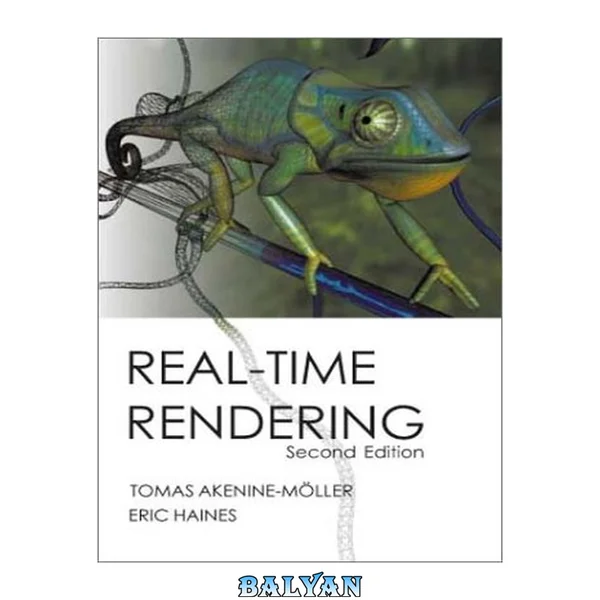
رندرینگ بلادرنگ، ویرایش دوم
۴۹٬۰۰۰ تومان
Real-Time Rendering, Third Edition
۴۹٬۰۰۰ تومان
Real-Time Rendering, Third Edition
۴۹٬۰۰۰ تومان
Real-Time Rendering, Third Edition
۴۹٬۰۰۰ تومان
Real Time Cloud Rendering for Games
۴۹٬۰۰۰ تومان
قیمت نهایی
۴۰٬۰۰۰ تومان