
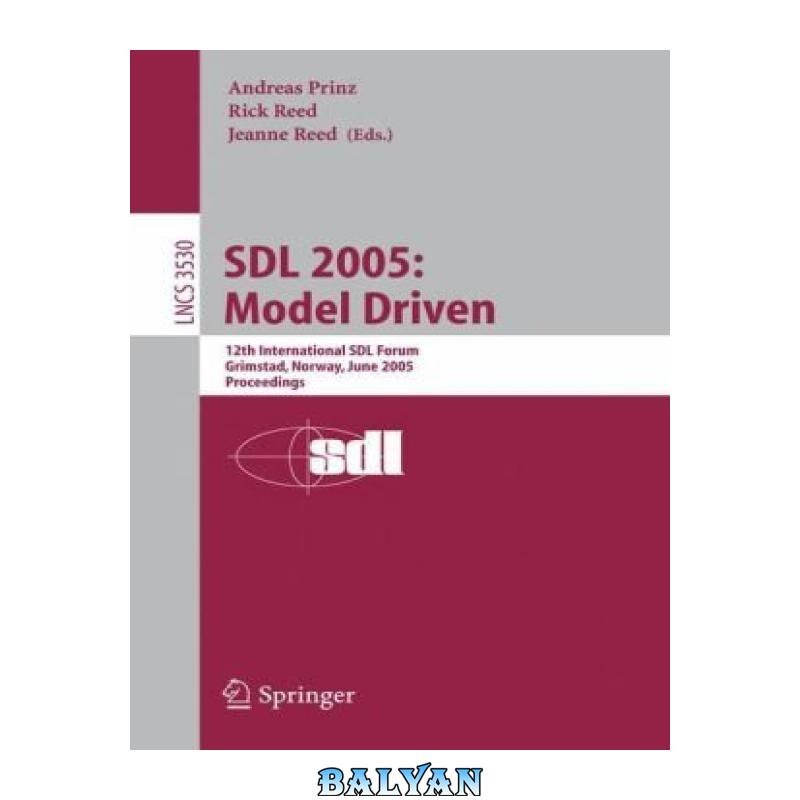


دانلود کتاب SDL 2005: Model Driven: 12th International SDL Forum, Grimstad, Norway, June 20-23, 2005. Proceedings
49,000 تومان
SDL 2005: مدل هدایت شده: دوازدهمین انجمن بین المللی SDL، گریمستاد، نروژ، 20-23 ژوئن، 2005. مجموعه مقالات
| موضوع اصلی | کنفرانس ها و سمپوزیوم های بین المللی |
|---|---|
| نوع کالا | کتاب الکترونیکی |
| ناشر | Springer-Verlag Berlin Heidelberg |
| تعداد صفحه | 364 |
| حجم فایل | 4 مگابایت |
| کد کتاب | 3540266127,9783540266129 |
| نوبت چاپ | 1 |
| نویسنده | Andreas Kunert, Andreas Prinz, Jeanne Reed (eds.), Joachim Fischer, Markus Scheidgen (auth.), Michael Piefel, Rick Reed |
|---|---|
| زبان | انگلیسی |
| فرمت | |
| سال انتشار | 2005 |
جدول کد تخفیف
| تعداد کتاب | درصد تخفیف | قیمت کتاب |
| 1 | بدون تخفیف | 25,000 تومان |
| 2 | 20 درصد | 20,000 تومان |
| 3 الی 5 | 25 درصد | 18,750 تومان |
| 6 الی 10 | 30 درصد | 17,500 تومان |
| 11 الی 20 | 35 درصد | 16,250 تومان |
| 21 الی 30 | 40 درصد | 15,000 تومان |
| 31 الی 40 | 45 درصد | 13,750 تومان |
| 41 الی 50 | 50 درصد | 12,500 تومان |
| 51 الی 70 | 55 درصد | 11,250 تومان |
| 71 الی 100 | 60 درصد | 10,000 تومان |
| 101 الی 150 | 65 درصد | 8,750 تومان |
| 151 الی 200 | 70 درصد | 7,500 تومان |
| 201 الی 300 | 75 درصد | 6,250 تومان |
| 301 الی 500 | 80 درصد | 5,000 تومان |
| 501 الی 1000 | 85 درصد | 3,750 تومان |
| 1001 الی 10000 | 90 درصد | 2,500 تومان |
ترجمه فارسی توضیحات (ترجمه ماشینی)
SDL 2005: مدل هدایت شده: دوازدهمین انجمن بین المللی SDL، گریمستاد، نروژ، 20-23 ژوئن، 2005. مجموعه مقالات
این جلد شامل مقالات ارائه شده در دوازدهمین انجمن SDL، گریمستاد، نروژ است. انجمن SDL برای اولین بار در سال 1982 و سپس هر دو سال یک بار از سال 1985 برگزار شد. ITU). از آن زمان، تحولات زیادی رخ داده و زبان دستخوش تغییرات متعددی شده است. با این حال، پارادایم زیربنایی اصلی باقی مانده است، و دلیل موفقیت Speci?cation و زبان توصیف در بسیاری از پروژه ها است. این پارادایم بر اساس اصول مهم کاربردهای توزیع شده زیر استوار است: ارتباطات: سیستم های بزرگ تمایل دارند با استفاده از قطعات کوچکتر که با یکدیگر ارتباط برقرار می کنند توصیف شوند. حالت: سیستم ها بر اساس یک مفهوم صریح از حالت توصیف می شوند. تغییر حالت: رفتار سیستم بر حسب تغییرات (محلی) وضعیت توصیف می شود. زبان اصلی تنها نماینده این نوع پارادایم نیست، بنابراین دامنه انجمن SDL خیلی زود پس از اولین رویداد گسترش یافت تا سایر زبانهای استاندارد ITU از همان خانواده، مانند MSC، ASN.1 را نیز شامل شود. و TTCN. این منجر به دامنه فعلی زبانهای طراحی سیستم شد که تمام مراحل فرآیند توسعه شامل SDL، MSC، UML، ASN.1، eODL، TTCN و URN خاص را پوشش میدهد. تمرکز به وضوح بر روی مزایا برای کاربران است، و چگونه می توان از این زبان ها همان مزیت ارائه شده توسط ITU Speci?cation و Language Description: تولید کد از مشخصات سطح بالا را از این زبان ها دریافت کرد.
This volume contains the papers presented at the 12th SDL Forum, Grimstad, Norway. The SDL Forum was ?rst held in 1982, and then every two years from 1985. Initially the Forum was concerned only with the Speci?cation and Description Language that was ?rst standardized in the 1976 Orange Book of the Inter- tional Telecommunication Union (ITU). Since then, many developments took place and the language has undergone several changes. However, the main underlying paradigm has survived, and it is the reason for the success of the Speci?cation and Description Language in many projects. This paradigm is based on the following important principles of distributed – plications: Communication: large systems tend to be described using smaller parts that communicate with each other; State: the systems are described on the basis of an explicit notion of state; State change: the behavior of the system is described in terms of (local) changes of the state. The original language is not the only representative for this kind of paradigm, so the scope of the SDL Forum was extended quite soon after the ?rst few events to also include other ITU standardized languages of the same family, such as MSC, ASN.1 and TTCN. This led to the current scope of System Design Languages coveringallstagesofthedevelopmentprocessincludinginparticularSDL,MSC, UML, ASN.1, eODL, TTCN, and URN. The focus is clearly on the advantages to users, and how to get from these languages the same advantage given by the ITU Speci?cation and Description Language: code generation from high-level speci?cations.
برای فرستادن دیدگاه، باید وارد شده باشید.







نقد و بررسیها
هنوز بررسیای ثبت نشده است.