
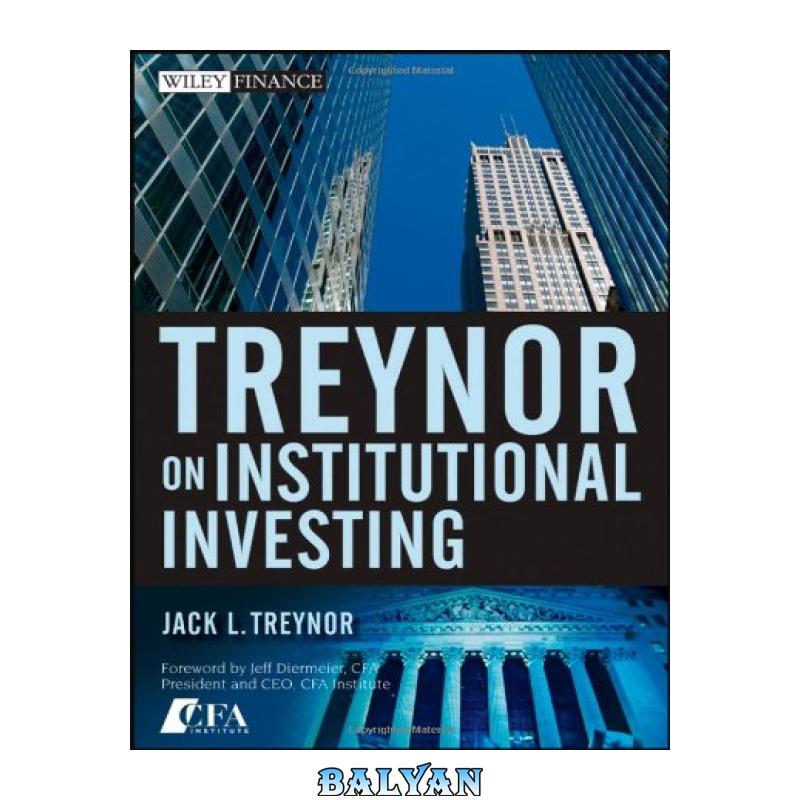


دانلود کتاب Treynor On Institutional Investing (Wiley Finance)
49,000 تومان
Treynor در مورد سرمایه گذاری نهادی (Wiley Finance)
| موضوع اصلی | اقتصاد |
|---|---|
| نوع کالا | کتاب الکترونیکی |
| ناشر | Wiley |
| تعداد صفحه | 602 |
| حجم فایل | 2 مگابایت |
| کد کتاب | 047011875X,9780470118757,9780470187524 |
| نویسنده | Jack L. Treynor |
|---|---|
| زبان | انگلیسی |
| فرمت | |
| سال انتشار | 2007 |
جدول کد تخفیف
| تعداد کتاب | درصد تخفیف | قیمت کتاب |
| 1 | بدون تخفیف | 25,000 تومان |
| 2 | 20 درصد | 20,000 تومان |
| 3 الی 5 | 25 درصد | 18,750 تومان |
| 6 الی 10 | 30 درصد | 17,500 تومان |
| 11 الی 20 | 35 درصد | 16,250 تومان |
| 21 الی 30 | 40 درصد | 15,000 تومان |
| 31 الی 40 | 45 درصد | 13,750 تومان |
| 41 الی 50 | 50 درصد | 12,500 تومان |
| 51 الی 70 | 55 درصد | 11,250 تومان |
| 71 الی 100 | 60 درصد | 10,000 تومان |
| 101 الی 150 | 65 درصد | 8,750 تومان |
| 151 الی 200 | 70 درصد | 7,500 تومان |
| 201 الی 300 | 75 درصد | 6,250 تومان |
| 301 الی 500 | 80 درصد | 5,000 تومان |
| 501 الی 1000 | 85 درصد | 3,750 تومان |
| 1001 الی 10000 | 90 درصد | 2,500 تومان |
ترجمه فارسی توضیحات (ترجمه ماشینی)
Treynor در مورد سرمایه گذاری نهادی (Wiley Finance)
جدیدترین متن جک ال ترینور، Treynor در مورد سرمایه گذاری نهادی، قرار است به عهد جدید اقتصاد مالی تبدیل شود. با پیشگفتاری آموزنده توسط رئیس و مدیر عامل موسسه CFA، جف دیرمایر، و همچنین مقدمه و مقدمه بخش جدید توسط آقای ترینور که زمینه مفیدی را ارائه می دهد، اکنون اکثر کارهای زندگی آقای ترینر را در این مکان که به راحتی قابل دسترسی است مونتاژ کرده ایم. گلچین از Wiley Finance.
آقای Treynor، تحت الحمایه فرانکو مودیلیانی و مربی فیشر بلک، واجد شرایط منحصر به فردی برای ارائه خرد سرمایه گذاری است. اگرچه آقای Treynor برای جریان اصلی چندان شناخته شده نیست، خوشبختانه برای جامعه سرمایه گذاری، داستان او اخیراً محبوبیت بیشتری پیدا کرده است. او که به عنوان یک رشته ریاضی در کالج هاورفورد آموزش دید، مدرسه بازرگانی هاروارد را با ممتاز در سال 1955 به پایان رساند و پس از آن یک سال در نوشتن پرونده برای پروفسور رابرت آنتونی ماند. در سال 1956 او مقاله ای در مورد اجاره تجهیزات سرمایه ای نوشت. در هاروارد به ترینور آموزش داده شده بود که راه تصمیم گیری درازمدت کارخانه این است که جریان 20، 30 یا 40 ساله مزایای آتی را به زمان حال کاهش دهیم و ارزش فعلی آن را با سرمایه گذاری اولیه مقایسه کنیم. نکته مهم این است که نرخ تنزیل باید منعکس کننده ریسک بودن مزایا باشد. با این حال، ترینور متوجه شد که وقتی جریان مزایا تا این حد ادامه داشت، ارزش فعلی آن به شدت به انتخاب نرخ تنزیل حساس بود. به سادگی با تغییر نرخ، یک پروژه مطلوب می تواند نامطلوب به نظر برسد و بالعکس. ترینور تصمیم گرفت تا رابطه بین ریسک و نرخ تنزیل را درک کند، و این انگیزه ای برای مشهورترین ایده او، یعنی مدل قیمت گذاری دارایی های سرمایه ای بود.
ترینور در سال 1956 در بخش تحقیقات عملیاتی در شرکت مشاوره Arthur D. Little شروع به کار کرد. در سال 1958 او سه هفته تعطیلات تابستانی خود را در کلبه ای در Evergreen، کلرادو گذراند و 44 صفحه یادداشت های ریاضی درباره مشکل خطر ایجاد کرد. از آن زمان به بعد، او شنبه ها و یکشنبه های خود را در دفتر ADL خود به کار بر روی آن می گذراند، فضایی مساعد برای تفکر سازنده — آرام و تقریباً خالی. راه حل Treynor برای مشکل بودجه بندی سرمایه این بود که نرخ تنزیل مناسب همان نرخی است که خود بازارهای سرمایه برای تنزیل جریان های نقدی آتی از آن استفاده می کنند. این هسته CAPM است.
در سال 1960 آقای ترینور پیش نویسی داشت که در سال 1961 با عنوان “ارزش بازار، زمان و ریسک” نامگذاری شد. او یک نسخه را به جان لینتنر در هاروارد داد که تنها اقتصاددانی بود که حتی اندکی میشناخت، اما لینتنر نتوانست ترینور را تشویق کند. یکی از همکاران ADL ترینور که در شیکاگو آموزش دیده است، استفان سوباتکا، پیش نویس را برای مرتون میلر فرستاد. میلر و مودیلیانی در سالهای 1958 و 1961 مقالات بزرگ خود را در زمانی که مودیلیانی در نورث وسترن تدریس میکرد، با هم نوشتند. حالا مودیلیانی در حال نقل مکان به MIT بود و با ترینر تماس گرفت و او را به ناهار دعوت کرد. مودیلیانی گفت که از پیش نویس مشخص است که ترینر باید به MIT بیاید و اقتصاد بخواند تا “زبان بیاموزد”. بنابراین آقای Treynor یک سال تعطیلی از ADL گرفت تا در MIT تحصیل کند. از آنجایی که بخش اول پیش نویس ترینور به مشکل یک دوره ای می پردازد، مودیلیانی پیشنهاد کرد که مقاله را به دو قسمت تقسیم کرده و آن قسمت را “به سوی نظریه ارزش بازار دارایی های مخاطره آمیز” نامگذاری کنید. ترینور این کار را انجام داد و بخش اول را به سمینار دانشکده مالی در پاییز 1962 و بخش دوم را با عنوان “پیامدهایی برای تئوری مالی” در بهار 1963 ارائه کرد. بعدها، ماه ها پس از بازگشت ترینور به ADL. ، مودیلیانی تماس گرفت تا درباره مقاله CAPM ویلیام شارپ به او بگوید و پیشنهاد داد که ترینور و شارپ پیش نویس ها را مبادله کنند. “به سوی یک نظریه ارزش بازار دارایی های پرخطر” هرگز منتشر نشد تا اینکه رابرت کورایچیک نسخه انگلیسی آن را در سال 1999 منتشر کرد. این مقاله پیشگام در بخش “ریسک” Treynor در سرمایه گذاری نهادی ارائه شده است.
پس از بازگشت ترینور به ADL، مدیرش، مارتین ارنست، از او پرسید که آیا این کار کاربرد عملی دارد یا خیر. Treynor چندین برنامه کاربردی را پیشنهاد کرد و ارنست بر روی اندازه گیری عملکرد تمرکز کرد. نتیجه دو مقاله هاروارد بیزنس ریویو بود که اولین مقاله با عنوان «نحوه رتبهبندی مدیریت صندوقهای سرمایهگذاری» در مورد اندازهگیری انتخاب، در سال 1965 منتشر شد. دومین مقاله (با کی مازوی)، با عنوان «آیا صندوقهای سرمایهگذاری متقابل میتوانند بازار را پیشی بگیرند؟»، درباره اندازهگیری زمانبندی، در سال 1966 دنبال شد.
هنگامی که فیشر بلک در سال 1965 به ADL رسید، به کارهای ترینور علاقه مند شد. پس از آنکه دان ریگان در سال 1966 ترینر را استخدام کرد تا برای او در مریل لینچ کار کند، بلک وارث کار ADL ترینور شد. Treynor و Black سه مقاله منتشر کردند، اما تنها یک، یک رویکرد بسیار هوشمندانه و مفید برای مدیریت فعال با عنوان “چگونه از تجزیه و تحلیل امنیتی برای بهبود انتخاب پورتفولیو استفاده کنیم”، در بخش “مدیریت فعال” به Treynor در سرمایه گذاری نهادی راه یافت. . بلک همچنین دومین ارائه Treynor را در MIT بازنویسی و بازنویسی کرد و آن را با عنوان “تصمیمات سرمایه گذاری شرکتی” به عنوان فصل 16 در مجموعه مایرز در سال 1976، توسعه های مدرن در مدیریت مالی منتشر کرد. متأسفانه نه نسخه 1963 و نه نسخه 1976 این مقاله در Treynor در سرمایه گذاری نهادی گنجانده شده است.
آقای ترینور در ادامه تئوری های خود را برای اهداف عملی در صنعت سرمایه گذاری به کار برد. او ثروت دانش خود را با تدریس در چندین نسل با نسل جوان به اشتراک گذاشت
Jack L. Treynor’s newest text, Treynor on Institutional Investing, is destined to become the New Testament of financial economics. With an informative foreword by the President and CEO of the CFA Institute, Jeff Diermeier, as well as a preface and new section introductions by Mr. Treynor providing useful context, we now have most of Mr. Treynor’s life’s work assembled in this easily-accessible anthology from Wiley Finance.
Mr. Treynor, the protégé of Franco Modigliani and the mentor of Fischer Black, is uniquely qualified to provide investment wisdom. Although Mr. Treynor is not well-known to the mainstream, fortunately for the investment community, his story has become more popular recently. Trained as a mathematics major at Haverford College, he completed Harvard Business School with distinction in 1955 and stayed on for a year afterwards writing cases for Professor Robert Anthony. In 1956 he coauthored a paper on capital equipment leasing. At Harvard, Treynor had been taught that the way to make long-term plant decisions was to discount the 20, 30 or 40 year stream of future benefits back to the present and compare its present value with the initial investment. Importantly, the discount rate should reflect the riskiness of the benefits. Treynor noticed, however, that when the stream of benefits lasted that long, its present value was extremely sensitive to the choice of discount rate; simply by changing the rate, a desirable project could appear undesirable, and vice-versa. Treynor resolved to try to understand the relation between risk and the discount rate, and this was the impetus for his most famous “idea in the rough”, the Capital Asset Pricing Model.
Treynor began working in the Operations Research department at the consulting firm Arthur D. Little in 1956. In 1958 he spent his three weeks of summer vacation in a cottage in Evergreen, Colorado, and generated 44 pages of mathematical notes on the risk problem. From then on he spent his Saturdays and Sundays working on it in his ADL office, an atmosphere conducive to productive cogitation — quiet and virtually empty. Treynor’s solution to the capital budgeting problem was that the proper discount rate is the one that the capital markets themselves utilize to discount future cash flows. This is the kernel of CAPM.
By 1960 Mr. Treynor had a draft, which in its 1961 incarnation was titled “Market Value, Time, and Risk” . He gave a copy to John Lintner at Harvard who was the only economist he knew even slightly, but Lintner failed to give Treynor any encouragement. One of Treynor’s Chicago-trained ADL colleagues, Stephen Sobotka, sent the draft to Merton Miller. Miller and Modigliani had co-authored their great 1958 and 1961 papers while Modigliani was teaching at Northwestern. Now Modigliani was moving to MIT, and he called Treynor and invited him to lunch. Modigliani said it was clear from the draft that Treynor needed to come to MIT and study economics, to “learn the lingo”. So Mr. Treynor took a one-year sabbatical from ADL to study at MIT. Since the first part of Treynor’s draft dealt with the one-period problem, Modigliani suggested breaking the paper into two and naming that part “Toward a Theory of the Market Value of Risky Assets”. Treynor did so, and presented the first part to the finance faculty seminar in the fall of 1962 and the second part, titled “Implications for the Theory of Finance”, in the spring of 1963. Later, months after Treynor was back working at ADL, Modigliani called to tell him about William Sharpe’s CAPM paper, and suggested that Treynor and Sharpe exchange drafts. “Toward a Theory of the Market Value of Risky Assets” was never published until Robert Korajczyk published an anglicized version in 1999. This pioneering paper is presented in the “Risk” section of Treynor on Institutional Investing.
After Treynor’s return to ADL his manager, Martin Ernst, asked him if this work had any practical applications; Treynor suggested several applications and Ernst focused on performance measurement. The result was two Harvard Business Review articles, the first, titled “How to Rate Management of Investment Funds”, on measuring selection, appeared in 1965; the second (with Kay Mazuy), titled “Can Mutual Funds Outguess the Market?”, on measuring timing, followed in 1966. Both of these innovative papers are included as chapters in the “Performance Measurement” section of Treynor on Institutional Investing.
When Fischer Black arrived at ADL in 1965, he took an interest in Treynor’s work. After Don Regan hired Treynor in 1966 to work for him at Merrill Lynch, Black inherited Treynor’s ADL case work. Treynor and Black coauthored three published papers , but only one, a very clever and utile approach to active management titled “How to use Security Analysis to Improve Portfolio Selection”, made its way into Treynor on Institutional Investing, in the “Active Management” section. Black also radically rethought and rewrote Treynor’s second MIT presentation, publishing it, titled “Corporate Investment Decisions”, as chapter 16 in Myers’ 1976 compilation, Modern Developments in Financial Management. Unfortunately neither the 1963 version nor the 1976 version of this paper are included in Treynor on Institutional Investing.
Mr. Treynor went on to apply his theories for practical purposes in the investment industry. He shared his wealth of knowledge with a younger generation by teaching at several universities. He served a dozen years as the editor of the Financial Analysts Journal, helping authors to present their ideas coherently and with clarity. Many of his papers over the years were published in the FAJ, some as articles and some as editorial commentary. Of the nearly 100 chapters in Treynor on Institutional Investing, two thirds of them are from the FAJ; some were originally published under his own name and others under his nom de plume, “Walter Bagehot”. A substantial number of these papers won awards, including the FAJ’s Graham and Dodd awards (multiple times) and the Roger F. Murray Prize. In addition, nearly one fifth of the material is from Treynor’s publications in the Journal of Investment Management, where he is a Senior Editor and Advisory Board member.
The book is organized in ten main sections corresponding to the areas of financial economics Mr. Treynor has studied over the years. His ruminations cover a broad swath of the investment universe, including risk, performance measurement, micro- and macroeconomics, trading, accounting, investment value, active management, pensions, and other miscellaneous papers. The book is not compiled along a “timeline”, but rather along “thought lines”.
Although Treynor on Institutional Investing includes most of Mr. Treynor’s work, it is not a perfectly comprehensive anthology. Several of the earliest known works, including Treynor and Vancil (1956), Treynor (1961), and Treynor (1963), are not included, and this is disappointing primarily from a historical perspective. Treynor and Black (1972), Treynor and Black (1976), and Treynor and Wagner (1983) are also missing from this new tome, which is also too bad although they can be obtained with reasonable ease elsewhere. Even Teldec’s “Bach 2000: The Complete Bach Edition” is not comprehensive, missing a substantial number of cantatas and lost concertos; however it is as comprehensive a compilation as one can find. Likewise, aside from several omitted gems, Treynor on Institutional Investing is a complete representation of Mr. Treynor’s work on investment analysis. For financial economists and market participants, it is music for the mind; Treynor is the Bach of Finance.
References
Bernstein, Peter L. (1992). Capital Ideas: The Improbable Origins of Modern Wall Street. New York: The Free Press.
French, Craig W. (2003). “The Treynor Capital Asset Pricing Model”. Journal of Investment Management, Vol.2, No. 1, second quarter, pp. 60-72.
Korajczyk, Robert A. (1999). Asset Pricing and Portfolio Performance Models, Strategy and Performance Metrics. London: Risk Books.
Mehrling, Perry (2005). Fischer Black and the Revolutionary Idea of Finance. Hoboken: Wiley Finance.
Mehta, Nina (2006). “FEN One on One Interview: Jack Treynor”. Financial Engineering News Issue No. 49, May/June, pp. 5-12.
Myers, Stuart C., editor. (1976). Modern Developments in Financial Management. Hinsdale: The Dryden Press.
Treynor, Jack L. (1961). “Market Value, Time, and Risk”. Unpublished manuscript dated 8/8/61, No. 95-209.
Treynor, Jack L. (1962). “Toward a Theory of Market Value of Risky Assets”. Unpublished manuscript. Subsequently published as Chapter 2 of Korajczyk (1999).
Treynor, Jack L. (1963). “Implications for the Theory of Finance”. Unpublished manuscript.
Treynor, Jack L. (1965). “How to Rate Management of Investment Funds”. Harvard Business Review 43, pp. 63-75.
Treynor, Jack L. (2007). Treynor on Institutional Investing. Hoboken: Wiley Finance.
Treynor, Jack L. and Fischer Black (1972). “Portfolio Selection Using Special Information, under the assumptions of the Diagonal Model, with Mean-Variance Portfolio Objectives, and without Constraints”, pp. 367-84 in Mathematical Methods in Investment and Finance 4, edited by George P. Szego and Karl Shell. Amsterdam: North-Holland.
Treynor, Jack L. and Fischer Black (1973). “How to use Security Analysis to Improve Portfolio Selection”. Journal of Business 46, No.1, pp. 66-86.
Treynor, Jack L. and Fischer Black (1976). “Corporate Investment Decisions”, pp. 310-27 in Modern Developments in Financial Management, edited by Stewart C. Myers. New York: Praeger.
Treyno
برای فرستادن دیدگاه، باید وارد شده باشید.








نقد و بررسیها
هنوز بررسیای ثبت نشده است.